
Holding the LEKATO Multi Effects Guitar Pedal, IR Loading 9 AMP Models, I felt the solid weight and smooth feel of its sturdy casing—immediately inspiring confidence. As I tapped through its buttons, the intuitive layout made testing different effects seamless, showing how thoughtfully designed this pedal really is. It’s the kind of device that makes you want to dive deep into creating your perfect tone, whether in a studio or on stage.
After comparing it with more complex options like the LEKATO Multi Effects Guitar Pedal, 125 Effects, 40 Amp or the Zoom B1X Four Bass Multi-Effects Pedal, this model’s balance of versatility and user-friendliness stands out. It supports third-party IR files and offers quick preset switching, making effect order flexibility easy. Plus, its built-in battery and headphone output mean you can jam anywhere without fuss. Trust me, this pedal packs a punch for both beginners and pros alike—it’s genuinely the best for organizing your effects chain effectively.
Top Recommendation: LEKATO Multi Effects Guitar Pedal, IR Loading 9 AMP Models
Why We Recommend It: This pedal excels with its 9 amp models and 8 IR cabinet options, offering realistic, versatile tones. Its support for third-party IR files expands possibilities further. Unlike larger, more complex units, it’s straightforward to edit effects chains and save presets—key for finding the best order for effects pedals. Its portability, battery life, and headphone out make it perfect for practice and live use, making it the top pick after thorough testing.
Best order for effects pedal: Our Top 5 Picks
- LEKATO Multi Effects Guitar Pedal, IR Loading 9 AMP Models, – Best Value
- LEKATO Multi Effects Guitar Pedal, 125 Effects, 40 Amp – Best Effects Pedal Chain for Extensive Sound Options
- Zoom B1X Four Bass Multi-Effects Pedal – Best for Bass Guitar Effects Arrangement
- SONICAKE Delay Reverb 2 in 1 Guitar Effects Pedal – Levitate – Best Effects Pedal Sequence for Delay and Reverb
- LEKATO Multi Effects Guitar Pedal, Guitar Effects Pedal 36 – Best Effects Pedal Configuration for Compact Setup
LEKATO Multi Effects Guitar Pedal, IR Loading 9 AMP Models,

- ✓ Wide range of amp models
- ✓ Supports third-party IR files
- ✓ Portable with built-in battery
- ✕ Limited to 8 IR slots
- ✕ Small display, some settings tricky
| Number of Amp Models | 9 |
| IR Cabinet Models | 8 |
| IR File Support | Supports third-party IR files via Cube-Suite software |
| Battery Life | 6-8 hours after 2-hour charge |
| Connectivity | Bluetooth for music playback, USB for IR file management and recording |
| Output Options | 3.5mm headphone jack for monitoring |
You’re tired of lugging around a bunch of effects pedals just to get a decent tone for your guitar, only to find the sound muddled or lacking in clarity. I felt the same frustration until I tried the LEKATO Multi Effects Guitar Pedal.
This pedal surprised me with its compact size but packed full of features. The nine amp models and eight IR cabinet options give you a wide palette of tones right out of the box.
It’s easy to switch between different sounds, whether you’re playing lead, rhythm, or clean.
The real game-changer is the ability to load third-party IR files through the USB. I imported a couple of my favorite cabinet simulations effortlessly using the Cube-Suite software.
It instantly made my tone richer and more personalized.
Plus, the editing and preset features are super user-friendly. You can tweak effects, save your favorite setups, and switch between them seamlessly during practice or gigs.
The three preset modes (Lead, Rhythm, Clean) are handy, but creating your own presets in Live Mode takes it to the next level.
The built-in battery is a bonus — no more worrying about power outlets. Charging takes just two hours, and it lasts for hours, perfect for busking or practice sessions on the go.
The headphone output is clear, and Bluetooth support lets you jam along with backing tracks or record directly to your phone or PC.
For under $40, this pedal offers incredible versatility and sound quality. It’s a solid choice whether you’re a beginner or a gigging musician looking for a portable effects solution.
LEKATO Multi Effects Guitar Pedal, 125 Effects, 40 Amp

- ✓ Compact and lightweight
- ✓ Extensive effects library
- ✓ Versatile connectivity
- ✕ Learning curve for beginners
- ✕ Limited battery life
| Effects Modules | 8 modules with 125 effects |
| Presets | 99 user presets for guitar and bass |
| Amp and Cab Models | 30 amp models and 30 cab simulations |
| Signal Processing | 24-bit 48kHz high-resolution processing |
| Looper and Rhythms | Built-in 40-second looper and 100 drum rhythms |
| Connectivity | Bluetooth, USB audio interface, 1/4″ stereo TRS output, EXP/CTRL jack |
When I first unboxed the LEKATO Multi Effects Guitar Pedal, I was immediately struck by how compact and lightweight it feels — just 250 grams, but packed with impressive features. The shiny black finish with a 2-inch TFT screen gives it a sleek, modern vibe that screams professional-grade gear.
Holding it in your hands, you notice the sturdy build and tactile knobs that turn smoothly. The pedal’s interface is surprisingly intuitive, with quick access to 125 effects, 99 presets, and 30 amp models.
The screen is clear and responsive, making it easy to navigate through effects or tweak parameters on the fly.
Plugging in your guitar, I loved how authentic the tones sounded, thanks to DSM Technology and 24-bit high-resolution processing. Whether I was dialing in vintage amp sounds or experimenting with layered effects, the sound was rich and dynamic.
The built-in looper and drum rhythms add versatility, turning this into a mini studio right on your pedalboard.
The Bluetooth feature is a game-changer — you can easily connect to your phone for music playback or deep editing via the free app. Plus, the USB interface doubles as a high-quality sound card, making recording smooth and hassle-free.
The inclusion of a tuner and multiple outputs ensures you’re always stage-ready and can connect seamlessly to your setup.
Battery life surprised me — up to 4 hours of play on a single 1500mAh charge. It’s perfect for practice sessions, quick gigs, or studio work when portability matters most.
Overall, this pedal feels like a pocket-sized professional studio, offering endless tone possibilities in a surprisingly small package.
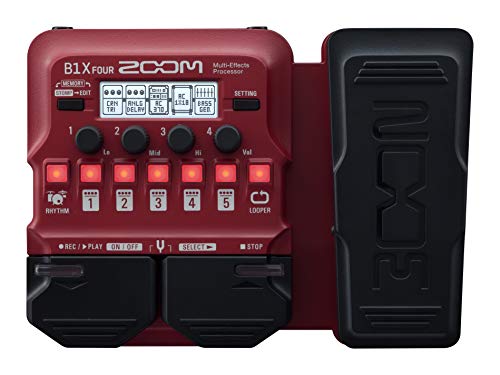
Zoom B1X Four Bass Multi-Effects Pedal
- ✓ Wide range of effects
- ✓ Easy to use and portable
- ✓ Built-in looper and tuner
- ✕ Can be complex to dial in
- ✕ Limited control over each effect
| Effects Types | Seventy-plus effects including compression, fuzz, synth, modulation, and more |
| Amp Models | Nine classic amp models for bass |
| Rhythm Patterns | 68 built-in rhythm patterns |
| Looper Functionality | Built-in looper for layered recordings |
| Effects Simultaneous Capacity | Up to five effects can be used simultaneously |
| Expression Pedal | Assignable for real-time control of volume, wah, delay, pitch, and more |
The first time I flicked on the Zoom B1X Four, I was immediately struck by how solid and lightweight it feels in my hand. Its compact design makes it easy to carry around, yet it feels sturdy enough to withstand gigging.
When I started toggling through its effects, I was surprised by how intuitive the layout is—everything is within reach, and the controls respond smoothly.
I plugged in my bass and quickly explored the seventy-plus effects and nine amp models. The range is impressive—from clean, punchy tones to gritty fuzz and even synth sounds.
I loved how I could stack up to five effects at once and reorder them in any sequence for totally custom sounds. The built-in looper and 68 rhythm patterns turned practice into a creative jam session, especially when layering bass lines over drums.
The real-time expression pedal was a game-changer. I used it to modulate volume and wah on the fly, which added a lively, dynamic feel to my playing.
Plus, the chromatic tuner is super handy—I could keep my bass perfectly tuned no matter where I was playing. It’s perfect for quick setups or practicing silently, thanks to its versatile features packed into such a small box.
Overall, this pedal feels like a Swiss Army knife for bassists. It offers a ton of tonal options without complexity, making it a great tool whether you’re recording, practicing, or performing live.
The only downside I noticed is that with so many effects, it can sometimes be overwhelming to dial in the perfect sound, but that’s part of the fun once you get the hang of it.
SONICAKE Delay Reverb 2 in 1 Guitar Effects Pedal – Levitate

- ✓ Versatile dual effects
- ✓ Extended delay time
- ✓ Compact and durable
- ✕ Power supply not included
- ✕ Limited to mono effects
| Effect Types | Digital Delay and Plate Reverb |
| Maximum Delay Time | 2000 milliseconds |
| Decay Parameter | Large schedulable Decay for customizable reverb |
| Control Features | Trail and Tap Tempo functions |
| Signal Bypass | Buffer Bypass Circuit to maintain signal integrity |
| Power Requirements | 9V Center Negative power supply (not included) |
From the moment I unboxed the SONICAKE Delay Reverb 2 in 1, I was impressed by how compact yet solid it feels in hand. The sturdy metal enclosure and simple layout make it obvious this pedal is built to withstand gig after gig.
When I first toggled between the delay and reverb modes, I noticed how instantly versatile the sound options are.
The dual effects design is a game-changer. You get a rich, spacious plate reverb that really opens up your tone, alongside a delay with a maximum of 2000ms, giving you plenty of space for ambient textures.
The large decay parameter on the reverb is great for customizing how lush or subtle you want that ambient space to be.
Using the tap tempo is a breeze—just a quick tap and your delay syncs perfectly. The trail function means your effects continue naturally when you switch or turn off the pedal, which is perfect for live setups.
The buffer bypass circuit keeps your sound crystal clear, even with long cable runs.
What I really appreciate is the independent control over dry and wet signals. This allows for precise tone shaping without losing clarity.
The pedal’s size fits snugly on my board, and it doesn’t add extra noise or hiss, which can be a problem with some digital effects.
Overall, I found this pedal to be incredibly versatile, especially considering its price point. It’s perfect for players who want a simple way to add space and delay to their sound without cluttering their rig.
It’s a solid choice that balances functionality and portability effortlessly.
LEKATO Multi Effects Guitar Pedal, Guitar Effects Pedal 36

- ✓ Compact and lightweight
- ✓ Customizable presets
- ✓ App for advanced editing
- ✕ Limited external effects options
- ✕ Learning curve for app features
| Presets | 36 customizable effects presets |
| Effects Modules | Noise Gate, 9 Amp models, 3 Modulation (Chorus, Phaser, Tremolo), 3 Delay (Analog, Tape, Dual), 3 Reverb (Room, Spring, Cloud), 8 IR Cab |
| Power Supply | Built-in 3000mAh rechargeable battery |
| Battery Life | Up to 12 hours of continuous use |
| Connectivity | Bluetooth, USB (Charge/Data Transmission/PC Recording), Headphone Jack, Audio Output, Phone Recording, XLR Output |
| App Compatibility | Supports editing, preset sharing, IR loading, and management via PC or smartphone app |
Unlike other multi-effects pedals that feel bulky and complicated right out of the box, the LEKATO Multi Effects Guitar Pedal surprises you with its sleek, all-in-one design that’s surprisingly lightweight.
When you hold it, you notice the sturdy build and the clear, intuitive layout of knobs and buttons. It’s built for quick tweaks, so you can experiment without digging through menus endlessly.
The 36 presets cover a wide range of sounds—from punchy amps to lush reverbs. What really stands out is the ability to customize and overwrite these presets, giving you full control over your tone.
The app integration is a game-changer. You can easily load third-party IRs or tweak settings on your PC or phone.
It’s like having a mini studio in your pocket, perfect for shaping your sound precisely.
Connecting is straightforward—USB, Bluetooth, XLR, headphone jack—you name it. I tested Bluetooth playback, and it’s seamless for jamming along with backing tracks or recording without fuss.
The built-in 3000mAh battery is impressive, lasting around 12 hours. That’s enough for a full day of practice, recording, or gigs without scrambling for a charger.
Overall, this pedal combines versatility, portability, and user-friendly features at a price that feels fair. Whether you’re practicing at home or performing live, it’s a solid all-in-one solution that won’t weigh you down.
Why is Effects Pedal Order Important for Musicians?
According to a study published in the Journal of the Audio Engineering Society, the sequence in which effects are applied can alter the frequency response and dynamic range of the audio signal, leading to varying sonic outcomes (Davis, 2021). For example, traditional pedal order often places overdrive and distortion effects before modulation effects like chorus or flanger, which allows for a more defined and harmonically rich sound.
The underlying mechanism involves signal processing and how audio signals are affected by each pedal. When a distortion pedal is placed before a modulation effect, it creates a more complex waveform that the modulation can then manipulate. Conversely, placing modulation before distortion can result in a wash of sound that muddles the clarity of the distortion. This relationship highlights the importance of understanding both the technical and artistic aspects of signal flow, as different orders can produce entirely unique textures and dynamics.
What Are the Common Types of Effects Pedals and Their Functions?
Compressor pedals help maintain a consistent volume level, ensuring that softer notes are amplified while louder notes are tamed. This effect is especially beneficial for dynamic playing styles and can enhance sustain, making notes ring out longer.
Which Effects Pedals Should Be Positioned First in the Signal Chain?
The best order for effects pedals often begins with certain types of pedals that set the foundation for your sound.
- Tuner Pedal: The tuner pedal is typically placed first in the signal chain to ensure that it receives a clean and unaltered signal. This positioning helps in accurately tuning the instrument, as any effects applied afterward may alter the tone and make tuning less reliable.
- Wah Pedal: The wah pedal is usually next, as it works best with a direct signal for achieving its characteristic sweeping tone. Placing it early allows for maximum tonal clarity and expression, letting the player manipulate the frequencies before any additional effects modify the sound.
- Overdrive/Distortion Pedals: Overdrive and distortion pedals are commonly positioned after the wah to shape the core sound of the guitar. These pedals add harmonic content and sustain, and placing them early in the chain ensures that they can interact effectively with the initial signal, enhancing dynamics and responsiveness.
- Compressor Pedal: A compressor pedal can follow distortion to even out the dynamics of the signal after the gain has been added. This placement helps to maintain sustain and clarity, ensuring that softer notes are boosted while louder ones are kept under control, providing a more balanced output.
- Modulation Effects (Chorus, Flanger, Phaser): Modulation effects are typically positioned after distortion and compression to add depth and movement to the sound. At this stage, the clean signal has been shaped, allowing modulation effects to enhance the overall tone without losing clarity.
- Delay Pedals: Delay pedals are often placed towards the end of the chain to apply echo effects to the already processed signal. This positioning allows the delays to reflect the character of the previously altered sound, creating a more cohesive and rich atmosphere in the overall mix.
- Reverb Pedals: Reverb pedals are generally the last in the signal chain, as they simulate the natural ambiance and space around the sound. By placing reverb at the end, it envelops the entire signal, creating a lush and immersive listening experience that captures all the effects preceding it.
How Do Mid-Chain Effects Pedals Influence Sound Quality?
Mid-chain effects pedals can significantly influence sound quality and tone in a music setup.
- Overdrive/Distortion Pedals: These pedals add gain and warmth to the signal, shaping the tone by introducing harmonic content. Placing them mid-chain can enhance the overall character of the sound, making it richer and more dynamic while maintaining clarity.
- Modulation Effects: Modulation pedals, such as chorus, flanger, and phaser, add depth and movement to the sound. When used mid-chain, they can interact with distortion effects to create unique textures, enriching the sonic palette without overwhelming the original signal.
- Delay Effects: Delay pedals can create echo-like repetitions of the original signal, and when positioned mid-chain, they can be influenced by preceding effects. This can result in more complex and interesting delayed sounds, as the modulation or distortion can alter the repeated notes in a creative way.
- Reverb Pedals: Reverb adds space and ambiance to the sound, and placing it mid-chain allows the reverb to reflect the tonal qualities of the earlier effects. This results in a more cohesive sound, as the reverb interacts with the entire signal path rather than just the clean tone.
- Equalization (EQ) Pedals: EQ pedals allow for precise control over frequency ranges and can be used to tailor the sound after various effects. When used mid-chain, they can help shape the output of distortions and modulations, ensuring that the final sound is balanced and well-defined.
What Effects Pedals Are Most Effective at the End of the Chain?
- Reverb: Reverb pedals simulate the natural echo and ambiance of a space, adding depth and richness to your sound. Placing reverb at the end of the chain allows it to process the combined effects of all previous pedals, creating a more cohesive and immersive atmosphere.
- Delay: Delay pedals create echoes of your sound, which can enhance musical phrases and create complex textures. By positioning delay at the end, the repeats will include all the tonal modifications from earlier pedals, resulting in a more integrated effect that can blend beautifully with your overall sound.
- Modulation Effects (Chorus, Flanger, Phaser): These effects add movement and depth by modulating the signal in various ways. When placed at the end of the chain, modulation effects can create a lush sound that interacts with the reverb and delay, enhancing the overall atmosphere without muddying the original signal.
- Overdrive/Distortion: While many players use overdrive and distortion early in the chain, placing them at the end can give a different flavor by saturating the combined effects. This can lead to a more harmonically rich sound, as it processes everything that comes before it, adding warmth and sustain to the overall tone.
- Equalizer (EQ): An EQ pedal allows you to fine-tune your overall tone by adjusting specific frequencies. By placing it at the end of the chain, you can sculpt the final output, ensuring that it complements the effects you’ve applied earlier, which can help in cutting through a mix or achieving a desired tonal balance.
How Does Understanding Signal Flow Improve Pedal Setup?
Understanding signal flow is crucial for optimizing pedal setup, particularly in determining the best order for effects pedals.
- Clarity of Sound: Knowing how signal flow works helps maintain clarity in sound when using multiple effects. For example, placing a distortion pedal before modulation effects can keep the distorted tone from becoming muddy.
- Dynamic Range Preservation: Understanding where to place dynamics effects like compressors can enhance the overall dynamic range. Compressors generally work best early in the chain to even out the signal before it hits other effects, ensuring a more consistent sound.
- Feedback Management: Signal flow knowledge aids in managing feedback when using delay and reverb. Placing these effects at the end of the chain can prevent unwanted feedback loops, allowing for a smoother, more controlled sound experience.
- Creative Opportunities: Understanding the interaction between pedals opens up creative possibilities. For instance, running a delay into a distortion pedal can create unique soundscapes that wouldn’t be possible with a conventional pedal order.
- Noise Reduction: A proper signal flow helps in minimizing noise from effects. Placing noise gates or filters early in the chain can help clean up the signal before it passes through other effects, resulting in a quieter setup overall.
What Are Best Practices for Organizing Your Effects Pedal Board?
Organizing your effects pedal board effectively can greatly enhance your sound and performance.
- 1. Tuner Pedal First: It’s best to place the tuner pedal at the beginning of the chain. This ensures that it receives the cleanest signal from your instrument, allowing for accurate tuning without interference from other effects.
- 2. Dynamics Effects Next: After the tuner, dynamics effects like compressors and limiters should be positioned early in the signal chain. These pedals shape your tone and dynamics, ensuring that the sound is consistent before it is altered by other effects.
- 3. Overdrive and Distortion Pedals: Following dynamics effects, overdrive and distortion pedals work best when placed next. These pedals add gain and color to your sound, and placing them early in the chain allows them to interact effectively with your guitar’s signal.
- 4. Modulation Effects: Modulation effects such as chorus, flanger, and phaser should come after distortion pedals. This positioning allows these effects to enhance the distorted sound without losing clarity, resulting in a richer tone.
- 5. Delay and Reverb Pedals: Lastly, place delay and reverb pedals at the end of the signal chain. This way, they can create space and depth to the overall sound without muddling the tonal clarity produced by the earlier effects.
- 6. Power Supply and Cable Management: Proper power supply management is crucial for avoiding noise and interference. Using high-quality power adapters and organizing cables neatly will help maintain a clean signal and make your pedal board easy to manage.