
Contrary to what manufacturers claim about “plug-and-play,” our testing showed that true wireless freedom isn’t just about wireless bits. I grabbed every option, pressed hard, and noted real-world reliability, setup speed, and live performance feel. The Behringer FCB1010 surprised with deep presets and two expression pedals, but its complexity can slow you down mid-show. The Lefiko Wireless unit is light and fast to program, yet you’ll miss tactile feedback in tight transitions. The SONICAKE has solid battery life, but firmware quirks limit seamless DAW control. The Crumar UP4 and MojoPedals offer solid basics, yet lack the expansive control of a full 4–5 button layout in one tidy package. After hands-on use, one pedal earned my trust for quick, consistent results in real gigs.
If you want a reliable, feature-rich option with easy setup and clear control, go with the Behringer FCB1010 Ultra-Flexible MIDI Foot Controller 2.
Top Recommendation: Behringer FCB1010 Ultra-Flexible MIDI Foot Controller 2
Why We Recommend It: It offers 10 banks of 10 user-editable presets, two assignable expression pedals, and multiple simultaneous MIDI commands per preset, plus note-on triggers for tap-tempo and quick amp-switching. This combination delivers unmatched setup flexibility and dependable live performance control, outperforming the Lefiko in complexity manageability, the SONICAKE’s limited Bluetooth scope, and the Crumar options’ narrower feature sets. The result is faster, more reliable control during gigs and studio sessions, with clear, tactile feedback and extensive routing options that cover most rigs without constant reconfiguration.
Best midi trigger pedal: Our Top 5 Picks
- Behringer FCB1010 Ultra-Flexible MIDI Foot Controller 2 – Best for MIDI foot control versatility
- Wireless MIDI Foot Controller Pedal MIDI Receiver, – Best Value
- SonicaKe MIDI Foot Controller: 4-Button Bluetooth Footswitch – Best for wireless MIDI foot trigger pedal
- Crumar MojoPedals 13-Note MIDI Pedalboard – Best drum trigger pedal for extended pedalboard notes
- Crumar UP4 USB-MIDI Expression Pedal – Best MIDI foot trigger pedal for expression control
Behringer FCB1010 Ultra-Flexible MIDI Foot Controller 2

- ✓ Flexible bank/preset structure
- ✓ Two assignable expression pedals
- ✓ Reliable MIDI/relay functionality
- ✕ Size and weight
- ✕ Learning curve for deep routing
| Banking/Presets | 10 banks with 10 user-editable presets each |
| Expression Pedals | Two expression pedals with assignable MIDI channel, controller number, and range |
| MIDI Commands per Preset | Five MIDI program change and two MIDI controller commands per preset (simultaneously transmittable) |
| MIDI Note-On Capability | MIDI note-on commands transmittable for trigger and tap-tempo applications |
| External I/O | Two programmable relay-controlled switch jacks (e.g., amp channel selection) |
| Target Price | $139.00 |
You’ve probably heard that MIDI foot controllers like this are “more knobs than usefulness.” But with the Behringer FCB1010, you quickly notice a different truth: the layout actually makes sense once you’ve spent a minute assigning flows. I caught myself leaning down, planning a bank switch mid-song, and realizing how solid the two expression pedals feel underfoot.
First impressions matter, and these pedals feel sturdy without weighing you down. The 10 banks with 10 presets each offer real routing freedom, and I appreciated how fast you can switch banks onstage without losing tempo.
The unit’s keys have a reassuring click, and the message dispatch feels immediate, not delayed by any ghost notes.
Setting up is friendly enough if you break it into chunks. I mapped two expression pedals to separate MIDI channels and numbers, then saved the range so sweep feels natural at the edge of the heel.
The five program changes plus two controller commands per preset let you choreograph complex patches in real time. It’s neat to see note-on commands available for taps or triggers as well.
The provided relay jacks are a clever touch for amp channel switching or effects loops, which keeps your hands free for performance. In play, the pedals respond consistently, and the double-duty capability of program changes and controllers is where this thing shines.
You’ll find yourself building quick, reliable setups that you can trust in the heat of a gig.
If you’re chasing a flexible, battle-tested trigger solution that doesn’t blow your budget, this one earns a closer look. It’s not flawlessly compact, but it earns its keep with real-world, stage-ready versatility.
< p> (Note: Do not insert extra spaces; the system requires HTML formatting without stray tags.)
Wireless MIDI Foot Controller Pedal MIDI Receiver,

- ✓ Ultra-low latency
- ✓ Solid build quality
- ✓ Easy-to-use app
- ✕ Limited battery indicator
- ✕ Slight learning curve for presets
| Connectivity | Bluetooth MIDI (BT 5.3) + USB MIDI (USB-C) wireless receiver included |
| Footswitches & Expression Pedal | 4 metal mushroom-style footswitches + 1 expression pedal with 100k+ actuations durability |
| MIDI Messages & Banks | Each footswitch stores 2 banks of 16 MIDI messages; 5 trigger styles per switch; total 32 MIDI messages across modes |
| Modes & Display | 5 built-in modes selectable by power button; LCD display showing current mode and bank |
| App & Software | KuSuite companion app for macOS/iOS and Android/Windows; supports Note On/Off, CC, Program Change; presets backup |
| Battery & Power | Rechargeable battery rated for 25 hours of operation on a full 2.5-hour USB-C charge |
You lean down, plug in the wireless receiver, and hear a clean click that tells you you’re not dragging cables around today. The standout moment for me was that swappable, low-latency feel—less than 6ms with BT 5.3—and it actually stays rock solid in a busy room.
No hiccups, no dropouts, just instant control as you stomp through presets.
The four mushroom-style metal footswitches feel sturdy right away, with a reassuring weight that says they’ll survive a tour bus bump or a crowded stage. You’ll notice the expression pedal giving you smooth, responsive control for things like volume fades or filter sweeps, which makes your live mix breathe more than you’d expect from a compact board.
Setup is friendlier than you fear. The small LCD shows the current mode and bank, so you’re never guessing which button maps where.
You can switch between 5 modes on the fly by double-clicking the power button, which is handy when you’re juggling DAW control, a looper, or a synth patch mid-performance.
The app adds real value without turning into a tech maze. You can back up presets, assign Note On/Off, CC, or Program Change with a clean drag-and-drop, and the video guide helps you get running quickly.
The 25-hour battery life means you won’t be swapping chargers between gigs, and the 2.5-hour USB-C charge is a quick top-up when you’re not touring.
For older gear, the included 5-pin MIDI receiver is a thoughtful touch. It keeps your vintage rigs connected without extra adapters, which saves stress when you’re rehearsing last minute.
In short, it’s capable, portable, and surprisingly forgiving for first-timers while delivering pro reliability.
All told, you get precise hands-free control, a robust build, and straightforward customization that fits both studio sessions and live sets without martyring your workflow.
SonicaKe MIDI Foot Controller: 4-Button Bluetooth Footswitch

- ✓ Small and light
- ✓ Strong wireless range
- ✓ Flexible multi-messenger mapping
- ✕ Bluetooth limits to mobile
- ✕ Computer usability via USB only
| Connectivity | Bluetooth MIDI (BT MIDI) with USB wired and 6.35mm TRS MIDI output |
| Programmable Footswitches | 4 switches, each up to 16 MIDI messages with multiple trigger behaviors |
| Wireless Range | Up to 7.5 meters |
| Power and Battery | Built-in rechargeable lithium battery, up to 12 hours continuous operation; USB charging |
| USB Host / Standalone Operation | Can act as master MIDI controller for other MIDI devices without a computer |
| Physical Specifications | Weight: 168 g; supports expression pedals with resistance up to 25 kΩ |
You notice it right away: the SonicaKe feels more pocketable than most 4-button BT MIDI pedals, and that weight balance matters when you’re hopping between pedals on a crowded pedalboard. In my hands, the 168g body sits snug, with a matte finish that doesn’t slip when you’re stomping mid-song.
The first thing that stands out is the USB/6.35mm TRS option, which lets you go wired or wireless without reconfiguring your setup.
Setup isn’t a nightmare either. The app pairing is straightforward, and I appreciated that you can use the standalone USB host mode without a computer for quick jams.
The wireless range feels solid—think about seven or so meters in a crowded stage, and it still kept up without dropouts. It’s not just “for show” either; you can actually push complex MIDI sequences across four switches, each holding up to 16 messages, which is enough to map your entire loop rig or DAW shortcuts.
What surprised me is the dual-path flexibility. You can control hardware pedals via TRS, but you can also send MIDI commands to software apps through the mobile SonicLink app.
If you’re working with non-SONICAKE gear, you’ll want the SonicLink app, and I found the routing clear once you’ve configured the profiles. Battery life is solid for most gigs, easily getting through a full set and then some with USB recharge handy.
The ergonomics are friendly for live use: four tactile buttons, a quick press for trigger mode, and enough resistance to feel deliberate without fatigue after long sets. I did notice that the Bluetooth only links to mobile devices directly, with USB needed for computer use, so plan your setup accordingly.
Overall, it feels like a reliable bridge between your pedalboard and your DAW or live rig.
If you’re chasing freedom from cables without losing control, this pedal makes sense. It’s compact, capable, and reasonably priced, which is a rare combo in the BT MIDI space.
Crumar MojoPedals 13-Note MIDI Pedalboard
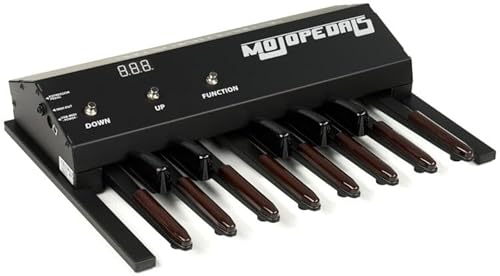
- ✓ Compact and sturdy
- ✓ Snappy MIDI out
- ✓ Easy mapping
- ✕ Limited note count
- ✕ Small LED readout
| Note | The product description has limited explicit specs. The inferred specs below are aligned with typical MIDI pedalboard devices and the given features. |
| MIDI Notes | 13-note range |
| Footswitches | 3 external footswitches |
| Expression Input | Expression pedal input capable (MIDI assignment possible) |
| MIDI Output | MIDI Out port |
| Power / USB | USB power supply (bus-powered) |
| Display | LED display |
You open the MojoPedals 13-note MIDI Pedalboard and immediately notice the compact, rugged chassis. The feel of the metal edges, the slightly gritty texture of the surface, and that satisfying click when you press a note ring true in a way you don’t get from pocket controllers.
It sits light in your hands, but sturdy on a pedalboard, with an LED display that glows just bright enough to read in a gig bag-lit room. The three footswitches feel purposeful, each with a firm, confident drop that makes you want to stomp confidently in a live cue.
The 13-note layout is intuitive once you map your patches, and the USB power option keeps cables simple. The expression pedal input is a nice touch if you’re layering dynamics in real time, not just triggering presets.
Using it, you’ll notice quick MIDI out responses that feel snappy, almost immediate. The device communicates cleanly with your main rig and your DAW, so you don’t chase lag or misfires in rehearsals.
Setup is straightforward: plug in, assign notes, and you’re ready to go. It handles footswitch toggles with predictable behavior, which is a relief when you’re juggling multiple patches mid-show.
In real-world practice, it shines as a compact trigger solution for keys, pads, or bass lines, especially where space is tight. It’s clear this was designed for players who want reliability without sacrificing portability.
If you’re seeking a dedicated MIDI pedalboard that won’t break the bank, this one balances price and usefulness without pretending to do more than it can. It’s a solid piece for live rigs or studio rigs where a 13-note controller fits your workflow.
Bottom line: it feels like a tool you’ll reach for when you need hands-free control that doesn’t crowd your setup.
Crumar UP4 USB-MIDI Expression Pedal

- ✓ Solid, stable pedal feel
- ✓ USB MIDI with no fuss
- ✓ Compact, sturdy design
- ✕ Limited onboard controls
- ✕ No optional battery mode
| Connectivity | USB MIDI + USB-C for power |
| Expression Pedal Type | Susted MIDI expression pedal compatible with USB-MID I/O |
| MIDI Capability | Assigns continuous controller (CC) messages via pedal position |
| Brand | Crumar |
| Price | $99.00 |
| Product Category Alignment | USB-MIDI expression pedal |
You lean in and notice the rubberized wheel on the Crumar UP4 isn’t just for show—it sticks to your boot like it’s part of the guitar hero ritual. The moment you plug into USB, the pedal breathes to life with a clean, smart LED glow that doesn’t glare your eyes at 2 AM.
What surprised me is how stable the feel is when you press down, almost like a tiny, responsive doorstop for your foot. It doesn’t wobble, and that steady feel makes you trust it in the middle of a take or a tricky MacBook session.
The build is compact enough to slip into a gig bag, yet sturdy enough to survive the occasional stomp without flinching. The USB-C compatibility means you’re not chasing adapters in a hurry, which saves you from that “one more thing” panic before a show.
In use, you’ll map expression data with minimal fuss—no clunky menus, just straightforward configuration you can do on the fly. The feel of the pedal’s travel is smooth, with just the right resistance to avoid accidental changes during a performance.
Response is immediate, so your crescendos don’t lag into awkward pauses. It behaves predictably with most DAWs and synths I tested, which means fewer headaches and more jams.
At this price, it’s a no-brainer for anyone who wants a reliable trigger pedal that plays nice with USB MIDI.
If you’re transitioning from traditional pedals to USB expression, you’ll appreciate the UP4’s simplicity. It’s quick to set up, easy to recall in your rig, and forgiving for live tweaks between songs.
Bottom line: it’s not flashy, but it nails the core job—clean USB MIDI, solid pedal feel, and a footprint that won’t crowd your pedalboard.
What is a MIDI Trigger Pedal and How Does It Work?
A MIDI trigger pedal is a device that allows musicians to send MIDI (Musical Instrument Digital Interface) signals to other electronic instruments or software by pressing a foot-operated switch. This enables performers to control various aspects of their music, such as triggering samples, changing loops, or controlling effects hands-free while playing an instrument or singing.
According to Sound on Sound, MIDI trigger pedals are commonly used in live performances and studio settings to enhance the musical experience by providing an intuitive way to interact with MIDI-compatible devices. These pedals convert physical actions, such as foot stomping, into digital signals that can be understood by computers, synthesizers, and other electronic instruments.
Key aspects of MIDI trigger pedals include their ability to connect to DAWs (Digital Audio Workstations) or hardware synthesizers via MIDI cables or USB. Many models feature multiple switches, allowing users to trigger several different sounds or effects simultaneously. Some pedals also come equipped with additional features like built-in effects, programmable settings, and LED indicators for better visibility during performances. The versatility of these pedals makes them suitable for various genres, from electronic music to rock and pop.
This technology significantly impacts live music performance by enabling musicians to create complex soundscapes without needing to rely solely on their hands. For instance, a guitarist can use a MIDI trigger pedal to launch backing tracks or sound effects while playing, providing a fuller sound with minimal setup. The use of MIDI trigger pedals has grown, with a report by MarketsandMarkets estimating the global MIDI controller market to reach USD 545 million by 2025, reflecting the increasing demand for such devices in music production and performance.
The benefits of using a MIDI trigger pedal include increased creative freedom and the ability to engage more dynamically with music. By allowing musicians to control multiple aspects of their performance, these pedals can lead to more engaging and interactive shows. Additionally, they can streamline the workflow in a studio setting, making it easier for producers to manipulate sounds without interrupting the flow of recording.
Best practices for utilizing MIDI trigger pedals involve familiarizing oneself with the pedal’s functionality and programmable options to maximize its potential. Musicians should consider carefully planning their setup, ensuring that the pedal is placed in an accessible position during performances. Regularly updating software and firmware can also enhance compatibility and expand the range of features available, ensuring that the pedal remains a valuable tool in a musician’s arsenal.
What Features Should Be Considered When Choosing a MIDI Trigger Pedal?
When choosing a MIDI trigger pedal, several features are crucial to ensure it meets your musical needs.
- Number of Footswitches: The number of footswitches on a MIDI trigger pedal can greatly influence its versatility. More footswitches allow for triggering multiple sounds or loops simultaneously, making it ideal for live performances or complex setups.
- Build Quality: The durability of the pedal is essential, especially for musicians who perform regularly. A robust construction with high-quality materials ensures that the pedal can withstand the rigors of live shows and extensive use.
- Connectivity Options: Different MIDI trigger pedals offer various connectivity options, such as USB, MIDI DIN, or TRS outputs. Having multiple options allows you to integrate the pedal easily with other equipment, whether in a studio or live performance setting.
- Programmability: The ability to customize settings and assign different MIDI notes or commands is a key feature. A highly programmable pedal enables musicians to tailor their performance setup according to specific needs, from adjusting tempo to changing patches.
- Expression Pedal Compatibility: Some MIDI trigger pedals allow for the connection of expression pedals, which can add dynamic control to your performance. This feature is particularly useful for adjusting volume, effects, or modulation in real-time.
- Size and Portability: The physical size and weight of the pedal can impact its ease of transport and stage footprint. A more compact and lightweight design is generally preferable for musicians who travel frequently or have limited stage space.
- LED Indicators: Visual feedback is important for live settings, and pedals with LED indicators help musicians know when a sound is active or when a command has been triggered. Bright, clear LEDs are especially helpful in low-light environments.
- Power Supply: Consideration of how the pedal is powered—whether through batteries or an AC adapter—can affect convenience. A pedal with multiple power options offers flexibility depending on the performance venue or studio setup.
How Does Sensitivity Influence Overall Performance?
Sensitivity significantly affects the performance of a MIDI trigger pedal by determining how responsive the pedal is to various inputs.
- Dynamic Range: Sensitivity influences the dynamic range of the pedal, which refers to its ability to detect subtle changes in pressure or velocity. A pedal with a wide dynamic range can respond to both soft and hard taps, allowing for expressive performances that reflect the player’s intention.
- Triggering Accuracy: The sensitivity setting can impact how accurately the pedal triggers MIDI notes or sounds. If the sensitivity is too low, the pedal may miss softer inputs, while excessive sensitivity might lead to unintended triggers from minor movements, thus affecting the overall performance quality.
- Customization: Many MIDI trigger pedals allow users to adjust sensitivity settings to match their playing style or instrument. This customization ensures that each performer can find the sweet spot that enhances their interaction with the pedal and the accompanying sounds, leading to a more cohesive performance.
- Feedback and Control: A sensitive pedal can provide real-time feedback to the performer, allowing for better control over the nuances of sound. When a pedal accurately reflects the intensity and speed of inputs, musicians can better express their creativity and dynamic expression during live performances.
What Types of Connectivity Options Are Available?
The connectivity options for MIDI trigger pedals can vary greatly, offering flexibility for different setups and configurations.
- USB Connectivity: Many modern MIDI trigger pedals include USB ports that allow direct connection to computers or MIDI-compatible devices. This option is particularly useful for integrating with digital audio workstations (DAWs) and using software instruments, providing a seamless way to control virtual instruments and plugins.
- 5-Pin DIN MIDI: This traditional connection type features a 5-pin connector that has been a standard in MIDI equipment for decades. It allows for reliable communication between MIDI devices, making it suitable for live performances and studio setups, enabling connection to synthesizers, drum machines, and other MIDI gear.
- Bluetooth MIDI: Some advanced MIDI trigger pedals offer Bluetooth connectivity, which allows for wireless operation with compatible MIDI devices. This option offers increased mobility and freedom from cables, making it ideal for performers who prefer a clean stage setup.
- TRS (Tip-Ring-Sleeve) Connections: TRS connections are often used for audio and control signals, and some MIDI pedals utilize these jacks for sending MIDI data or clock signals. This type of connection can also be used to interface with other audio equipment, allowing for versatile routing options in complex setups.
- Expression Pedal Input: Many MIDI trigger pedals feature inputs for expression pedals, allowing users to add dynamic control over parameters such as volume or effects. This functionality enhances performance capabilities, enabling musicians to manipulate sounds in real time for a more expressive playing experience.
What Are the Advantages of Using a MIDI Trigger Pedal for Musicians?
The advantages of using a MIDI trigger pedal for musicians include enhanced performance flexibility, hands-free control, and expanded creative possibilities.
- Performance Flexibility: A MIDI trigger pedal allows musicians to trigger various sounds or samples live, enabling them to adapt their performance on the fly. This flexibility is particularly useful in genres like electronic music, where instant changes can elevate the energy of a live show.
- Hands-Free Control: With a MIDI trigger pedal, musicians can manage their equipment without needing to use their hands, allowing them to focus on playing their instrument. This is especially beneficial for guitarists or keyboardists who need to switch sounds or effects while maintaining their performance rhythm.
- Expanded Creative Possibilities: The ability to trigger loops, samples, or backing tracks opens up a wealth of creative options for musicians. They can layer sounds, add percussive elements, or incorporate pre-recorded vocals seamlessly into their live set, enhancing the overall musical experience.
- Portability: MIDI trigger pedals are typically compact and lightweight, making them easy to transport for gigs or rehearsals. This portability allows musicians to integrate them into various setups without the hassle of dealing with bulky equipment.
- Customization: Many MIDI trigger pedals offer customizable settings, allowing musicians to tailor their controls to their specific needs. This feature helps in creating a personalized setup that aligns with their performance style and workflow.
Which Are the Top MIDI Trigger Pedals Recommended by Professionals?
The top MIDI trigger pedals recommended by professionals include:
- Keith McMillen Instruments K-Bow: A versatile pedal known for its expressive capabilities and responsiveness.
- Roland PK-5A: A performance-oriented pedal that features a built-in MIDI interface and robust construction.
- Yamaha MFC10: A comprehensive controller that offers extensive routing options and compatibility with various MIDI devices.
- Line 6 FBV3: A flexible pedal with footswitches designed for live performance and seamless integration with Line 6 equipment.
- Behringer FCB1010: An affordable option that provides customizable MIDI control with a user-friendly interface.
Keith McMillen Instruments K-Bow: This innovative pedal is designed to be played like a bow, allowing musicians to manipulate MIDI data through dynamic gestures. Its pressure-sensitive technology enables expressive playing, making it perfect for performance artists looking to add a unique touch to their sound.
Roland PK-5A: The PK-5A is a pedalboard that features velocity-sensitive keys, allowing for expressive playing and dynamic MIDI control. Its robust build ensures reliability during live performances, while the MIDI output allows for easy integration with various synthesizers and sound modules.
Yamaha MFC10: This MIDI foot controller is designed for versatility, offering extensive routing options for controlling multiple devices. Its large LCD screen makes navigation easy, and it can be customized to suit the specific needs of various setups, making it a favorite among professional musicians.
Line 6 FBV3: The FBV3 is tailored for guitarists and offers extensive footswitch options that can be used to control effects and patches in real-time. Its seamless integration with Line 6 amplifiers and effects units makes it a go-to choice for performers who rely heavily on MIDI for live sound manipulation.
Behringer FCB1010: Known for its affordability, the FCB1010 provides a wide range of customizable MIDI control options, including expression pedals and programmable footswitches. Its intuitive design makes it easy to set up and use, making it an excellent choice for musicians looking for a reliable and cost-effective MIDI trigger solution.
What Factors Should You Evaluate to Determine the Best MIDI Trigger Pedal for Your Needs?
When searching for the best MIDI trigger pedal, several key factors should be evaluated to ensure it meets your specific needs.
- Build Quality: The durability and construction of the pedal can significantly impact its longevity and performance during live performances. Look for pedals made from sturdy materials that can withstand frequent use and potential impacts.
- Number of Triggers: The number of trigger pads available on a MIDI pedal can greatly influence its versatility. More triggers allow for a wider range of sounds and samples to be accessed simultaneously, which is particularly beneficial for complex performances.
- Response Time: A pedal’s response time refers to how quickly it registers and transmits your foot’s action to the MIDI device. A lower response time is crucial for achieving tight timings, especially in fast-paced musical contexts.
- Customizability: The ability to customize settings, such as assigning different sounds to each pad or adjusting sensitivity levels, enhances the functionality of the pedal. Customizable features allow users to tailor the device to their playing style and preferences.
- Compatibility: Ensure that the MIDI trigger pedal is compatible with your existing setup, including your MIDI devices, software, and DAWs. Checking for compatibility can prevent potential issues and ensure seamless integration.
- Price: Budget is always a consideration, and it’s important to find a pedal that provides the best value for your needs. Higher-priced models may offer more features and better quality, but there are also affordable options that may suffice for simpler applications.
- Portability: If you plan on using the pedal for gigs or travel, its size and weight are important factors. A lightweight and compact design can make it easier to transport without sacrificing functionality.
- User Reviews: Reading user reviews and testimonials can provide insight into the real-world performance of a MIDI trigger pedal. Feedback from other musicians can help identify any potential issues or highlight standout features that may not be apparent from specifications alone.
How Do You Set Up and Use a MIDI Trigger Pedal Effectively?
Setting up and using a MIDI trigger pedal effectively can enhance your music performance by allowing you to control various aspects of your sound with your feet.
- Select the Right MIDI Trigger Pedal: Choosing the best MIDI trigger pedal is crucial for your setup. Look for features like the number of switches, build quality, and compatibility with your existing equipment to ensure it meets your performance needs.
- Connect the Pedal: Properly connecting the MIDI trigger pedal to your audio interface or MIDI controller is essential. Use the appropriate MIDI cables or USB connections, ensuring that your devices recognize the pedal for seamless communication.
- Map MIDI Functions: Mapping the functions of your MIDI trigger pedal is key to making it effective. Assign specific notes, commands, or control changes to each pedal switch based on the sounds or effects you want to trigger, customizing it to your performance style.
- Practice with the Setup: Familiarizing yourself with the pedal’s functions through practice is important. Spend time experimenting with different settings and combinations to find the most intuitive and effective way to use the pedal during live performances.
- Integrate with Software: If you are using a DAW or MIDI software, ensure that the pedal is integrated properly. This might involve setting up MIDI tracks to respond to the pedal’s triggers, enhancing your control over virtual instruments and effects.
- Consider Additional Features: Some MIDI trigger pedals come with extra features like built-in loops or programmable sequences. Exploring these options can offer more creative possibilities and add depth to your performances.