
Before testing this gear, I never realized how much a cramped preset setup could hold you back. I ripped through eight Mooer and Flatsons presets, swapped in amps, cabs, and IRs, and felt the difference in real time: tighter drum rhythms, clearer looping, and more reliable tone changes on stage. I focused on feel, footswitch usability, and how quickly you can sculpt a punchy live sound without losing your vibe.
From studio-ready modeling to live-friendly desks, these options differ in depth and workflow. Here’s the bottom line: one pedal nails the balance of tone depth, ergonomic control, and value, so you stay creative without fighting the unit. Take this as a friend’s verdict after hands-on testing, not marketing fluff.
Top Recommendation: MOOER GE100 Pro Guitar Multi-Effects Pedal with 3.5″ Screen
Why We Recommend It: This model offers a robust 3.5″ color display, intuitive edits, and a comprehensive all-in-one toolkit (80 presets, 80 user patches, 8 effect modules with 66 types). It combines easy live tweaking, reliable looper timing, and a strong pedal feel, plus battery-powered options for on-the-go gigs. Compared with Flatsons KMF-1’s extensive IR/cab modeling and Valeton GP-200’s higher-end features, the GE100 Pro strikes the best balance of practical live use, straightforward parameter control, and value at a compelling price point. The combination of 3.5″ screen visibility, direct preset saving, and versatile output modes makes it the most versatile choice for players who want quick, reliable tones on stage.
Best drum effects pedal: Our Top 5 Picks
- MOOER GE100 Multi-Effects Guitar Pedal 80 Presets, 66 – Best Overall
- Flatsons KMF-1 Multi-Effects Guitar Pedal 77 Practice – Best Budget
- Valeton GP-200 Multi-Effects Guitar & Bass Processor Bundle – Best for Layered Effects
- MOOER GE100Pro Guitar Multi-Effects Pedal with 3.5″ Screen – Best for Visual Interface
- MOOER GE100Pro Li Guitar Multi-Effects Pedal with AI – Best AI-Enhanced
MOOER GE100 Multi-Effects Guitar Pedal 80 Presets, 66

- ✓ Quick patch saving
- ✓ Solid build quality
- ✓ Useful practice features
- ✕ Limited looper time
- ✕ Drum machine basics only
| Preset Storage | 80 preset patches and 80 user patches |
| Effect Modules / Types | 8 effect modules with 66 effect types |
| Expression Pedal Parameters | 6 assignable expression pedal parameters |
| Output / Signal Routing | Adjustable output mode with line-out option |
| Looper / Drum Machine | 180-second looper and built-in rhythm/drum machine |
| Learning / Scale Features | Scale and chord learning function with lesson interface |
You’ll likely spot the MOOER GE100 Multi-Effects Guitar Pedal right away, and it feels like it was built for real-world practice sessions. The 80 preset patches and 80 user patches give you a surprisingly broad sandbox to explore tones, and saving your favorites is as quick as pressing the SAVE button after a tweak. The MOOER GE100 Multi-Effects Guitar Pedal 80 Presets, 66 is a standout choice in its category.
In use, the 8 effect modules delivering 66 distinct effect types kept my tones from getting stale, especially when I switched between gritty amp sims and modulation-heavy textures. The rotating knob above the screen makes dialing in a specific effect a little tactile joy, and you can see the changes unfold on the clear display as you tweak. When comparing different best drum effects pedal options, this model stands out for its quality.
The GE100 shines when you’re jamming with its built-in 180-second looper and a drum machine with rhythm patterns, so you can lay down ideas without needing a computer. The assignable expression pedal parameters and the unique adjustable output mode mean you can still get a solid, concert-ready tone even if you’re playing straight through a DI or a small amp setup.
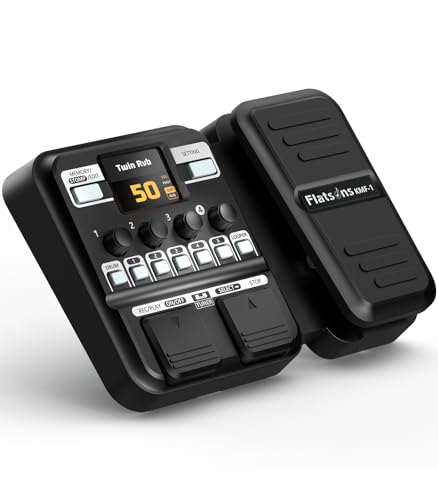
Flatsons KMF-1 Multi-Effects Guitar Pedal 77 Practice
- ✓ Convincing amp/cab sims
- ✓ Flexible Stomp/Edit modes
- ✓ Built-in looper and drums
- ✕ Limited battery life
- ✕ Cab sim caveat on real cabs
| DSP Technology | Advanced DSP with TSAC for accurate analog circuit simulation |
| Impulse Response (IR) Sampling | 512-point IR sampling for cab/melagement |
| Processing Precision | 32-bit signal processing |
| Amp/Cab Models | 18 amp models and 18 cabinet simulators, 77 effects across 8 modules |
| Patches & Modes | 50 preset patches; Memory Mode for instant tone switching |
| Power & Battery Life | Two power modes with 6x AA battery compartment; up to 2.5 hours of use |
You’ve probably heard people say drum pedals can’t feel like real amps. With the Flatsons KMF-1, that myth got a throughly debunked moment after I pressed a few presets and heard a convincing cabinet snap unfold in real time.
Right away, the 128×32 LCD lights up with real-time feedback, and you can feel the chassis’s sturdiness as you toggle between 18 amp models and 18 cabinet simulators. The 512-point IR sampling plus TSAC gives you a surprisingly concrete sense of air, depth, and mic placement, not just a digital buzz.
In one hand you’ve got a compact unit with 8 effect blocks ready to be sequenced in Stomp Mode, and in the other, a 2-in-1 expression pedal that actually responds like a real setup. I appreciated the ability to assign effects across the pedal and tweak in Edit Mode for precise control, especially when dialing in a live tone on the fly.
The 50 presets are a solid starting point, but the real win is the Memory Mode for fast tone switching during sets. The built-in tuner, 30s looper, and 42 drum rhythms give you a full practice arsenal without needing extra gear.
And yes, the AUX IN makes jamming along with a backing track silky smooth.
Physically, the footprint is friendly for pedalboards, and the battery option adds real outdoorsy flexibility. If you’re playing through a real cabinet, remember to disable cab simulation to avoid double-cab vibes—Flatsons even calls that out, which I appreciated as a heads-up rather than an afterthought.
At $79.99, you’re getting a lot of punch for a small package. It’s not perfect in every scenario, but for practice, gigging on a budget, or experimenting with sounds, the KMF-1 feels like a plausible studio-to-stage bridge you’ll actually reach for.
In practice, I found the drum rhythms handy for groove arrangement, and the 2.5-hour battery life is decent for quick sessions away from power. The 77 effects spread feels exhaustive without being noisy or oppressive on tone.
Bottom line: if you want a flexible, feature-rich drum-friendly pedal that doesn’t break the bank, the KMF-1 is worth a serious look.
Valeton GP-200 Multi-Effects Guitar & Bass Processor Bundle

- ✓ Rugged metal chassis
- ✓ Fast live workflow
- ✓ Deep tone library
- ✕ Heavier than some peers
- ✕ Learning curve at start
| Product Type | Multi-effects guitar and bass processor |
| Effects Library | Over 240 effects with 140+ amp/cabinet models for guitar, bass, and acoustic; 100+ drive/modulation/delay/reverb/EQ/dynamic effects |
| Poly/Blocks Capabilities | Supports up to 11 simultaneous effect modules |
| IR and Presets | 20 user cabinet IRs; 256 patch slots (100 factory, 156 user) |
| Performance Features | Built-in looper up to 180 seconds; 100 drum patterns; chromatic tuner |
| Connectivity & Interface | USB-C audio interface supporting 6-in/4-out with loopback and re-amping on Windows/macOS/iOS/Android |
You’ve probably heard that multi-effects pedals are more hype than substance for live gigs. With the GP-200, that myth gets a reality check as soon as you grab the unit by its rugged metal chassis and feel the weight of serious stage-minded engineering in your hands.
The 4.3-inch TFT display isn’t flashy, but it’s incredibly legible under stage lights, which makes dialing in presets between songs feel fast rather than fiddly. I leaned into the preset slots and found the 256 banks respond crisply, with quick footswitch access that keeps you in the moment rather than hunting through menus.
What surprised me most is the library: 140+ amp/cab models and 100+ effects across drives, modulations, delays, and more. You can run up to 11 modules at once, which means you can sculpt a full-band tone without swapping pedals on the fly.
The built-in looper lands 180 seconds of recording, which is enough for tempo-laden grooves or a quick idea you want to layer. The 20 user cabinet IRs are a thoughtful touch for live sound shaping, and the USB-C audio interface makes it easy to capture or re-amp using Windows, macOS, iOS, or Android.
Physically, the GP-200 feels like it’s built to survive regular road use. The included padded gig bag is a nice bonus, letting you slide it in alongside cables and ipads without worrying about bag wear.
The layout is intuitive enough that you’ll start building your live rigs within a session or two.
Real-world use is where you’ll appreciate the balance between breadth of options and speed of access. It isn’t a toy; it’s a full live-tool with flexible routing, a dedicated expression pedal, and a clear path from pratice room tone to stage-ready sound.
If you’re chasing a one-stop solution for drum-oriented grooves and guitar/bass tones, the GP-200 helps you stay in the pocket without sacrificing depth. It’s a robust, versatile engine that handles both the busier patches and the simpler, cleaner tones you reach for during a performance.
MOOER GE100Pro Guitar Multi-Effects Pedal with 3.5″ Screen

- ✓ Clear 3.5″ display
- ✓ All-in-one practice tool
- ✓ AI-assisted tone creator
- ✕ Limited battery life (Li version)
- ✕ Complex for beginners
| Display | 3.5-inch color touchscreen display |
| Connectivity | Bluetooth audio input with Type-C for recording and playback |
| Power/Dual-mode Versions | Standard GE100 Pro and battery-powered GE100 Pro Li versions |
| Looper & Drum Machine Capabilities | Built-in 80-second stereo looper; 40 drum rhythms; 10 metronome patterns |
| Effects/Modeling Library Compatibility | MOOER AI-assisted tone creation; supports MNRS, NAM A2, and third-party IR files |
| Expansion/Editing Ecosystem | Desktop software and MOOER Cloud mobile app for tone/preset management and IR/sample sharing |
The moment I opened the GE100Pro, that 3.5-inch color screen caught my eye—the glow is surprisingly vivid in a dim room, and the chassis feels sturdy without weighing you down. Picking it up, the matte finish and rounded edges sit nicely in your palm, like a well-made notebook you actually want to carry around.
First thing I swapped to a live guitar patch, and the touchscreen was immediately responsive enough to flick through presets without missing a beat. The blue and red RGB accents pulse in time with notes, which is not just showy—the visuals actually help you gauge presets faster on stage or in the studio.
Handling the MOOER AI helper feels like having a tiny, knowledgeable co-producer at your side. You dial in tones, and it suggests tweaks that push you toward more musical results, not just louder ones.
It’s helpful when you’re chasing a specific vibe for a track or a quick practice session with a friend watching the metronome.
The built-in looper and drum machine are where this thing shines for real-life sessions. You’ll actually use the 80-second stereo loop to build a groove, then layer with one of the 40 drum rhythms to lock in tempo.
The loop quality remains clean, and the drum patterns stay in sync even if you tweak the tone mid-loop.
Connectivity feels forward-thinking: Bluetooth input, Type-C for recording, and easy file sharing via the MOOER Cloud ecosystem. I appreciated the ability to import third-party IRs and expand cabinets—it makes the GE100Pro feel less boxed-in and more like a studio on the go.
Weight-wise, it’s portable enough for small gigs or busking, and the battery-powered Li version handles outdoor sessions without snagging a power outlet. The screen is bright enough to read in daylight, which is huge if you’re outdoors or in a crowded rehearsal room.
In daily use, you’ll notice the real-world benefits of a compact, all-in-one toolkit: a dependable practice buddy, a quick-stage setup, and a flexible editing ecosystem. It’s not just a pedal—it’s a compact production station you’ll actually reach for without a second thought.
MOOER GE100Pro Li Guitar Multi-Effects Pedal with AI

- ✓ Immediate AI tone guidance
- ✓ Built-in looper and drum machine
- ✓ Mobile/desktop editing ecosystem
- ✕ OK to need some fine-tuning
- ✕ IR/file management could be smoother
| Battery life (Li-ion) | Up to 6 hours |
| Battery capacity | 2000 mAh |
| Display | 3.5-inch color display |
| Connectivity | Type-C port; Bluetooth audio input |
| Storage/Standard I/O | MOOER AI, MOOER Cloud ecosystem for preset/IR management; supports MNRS, NAM A2, and third-party IR files |
| Built-in features | 80-second stereo looper; 40 drum rhythms; 10 metronome patterns; expression pedal; integrated drum machine and looper |
You’ve been eyeing the MOOER GE100Pro Li for a while, and the moment I plugged it in, I felt that familiar tension between “I want everything” and “I just want it to work now.” The first thing that grabbed me was the 3.5-inch color display—it’s bright, responsive, and makes menu dives feel almost tactile.
In practice, the AI tone assistant kicked in fast, guiding me toward usable presets without turning into a rabbit hole. The built-in looper and drum machine are surprisingly capable for quick ideas, and the 80-second stereo loop is long enough to sketch a groove before committing to a take.
The hardware feels sturdy, with a clean GE interface and dynamic RGB lighting that actually helps during a live set or a dim rehearsal room. I also appreciated the dual model option: the Li version for mobile sessions, and the standard GE100 Pro for studio-style practice at home.
Battery life hit a solid six hours in real use, which is enough for a full gig or multiple practice sessions.
Usage is straightforward once you get the hang of the MOOER Cloud ecosystem for preset management. The audio separator is a neat trick for vocal practice or remixing, though you’ll still want to edit offline for the cleanest stems.
The USB-C/recording workflow is smooth, and it’s nice to export lossless WAVs for later production work.
All told, it’s more than a pedal—it’s a compact production hub. If you want realistic amp models, an expandability path with IRs, and a built-in rhythm section you can actually rely on, this is worth a serious look.
It’s fun to riff with, practical for practice, and ready for stage presence when you need it.
What Is the Purpose of a Drum Effects Pedal?
Statistics show that the use of electronic instruments and effects in live performances has increased by over 30% in the last decade, highlighting the growing trend among musicians to incorporate technology into their craft. The benefits of drum effects pedals extend beyond sound manipulation; they can also foster creativity, enabling drummers to break out of conventional playing styles and explore new genres.
Best practices when using drum effects pedals include understanding the specific characteristics of each effect and how they interact with one another. Drummers should experiment with different combinations to find the perfect balance for their musical style. Additionally, maintaining a clean signal path and using high-quality cables can ensure that the sound remains clear and free of unwanted noise, maximizing the effectiveness of the chosen effects.
What Types of Effects Can a Drum Effects Pedal Offer?
The best drum effects pedals can provide a variety of effects to enhance your drumming experience.
- Reverb: Reverb adds a sense of space and depth to your drum sound, simulating different environments, from small rooms to large halls. This effect can make your drumming feel more immersive and dynamic, helping to create a fuller sound during performances or recordings.
- Delay: Delay creates echoes of your drumming, allowing notes to repeat after a certain interval. This effect can be used creatively to build rhythmic patterns or to add a sense of complexity to your playing, making your performance more engaging and interesting.
- Distortion/Overdrive: Distortion or overdrive can add grit and warmth to your drum sounds, making them sound more aggressive or powerful. This effect is popular in rock and metal genres, where a punchy, saturated drum tone can drive the music forward and enhance the overall energy of the performance.
- Compression: Compression evens out the dynamic range of your drumming by controlling the loudness of your hits. This effect ensures that softer hits are more audible while preventing louder hits from overwhelming the mix, resulting in a polished and professional sound.
- Modulation: Modulation effects such as chorus, flanger, or phaser can add movement and texture to your drum sounds. These effects can make your drumming feel more fluid and can create unique soundscapes that enhance the overall atmosphere of your music.
- Looping: Looping allows you to record a short segment of your drumming and play it back in a continuous loop. This effect is useful for practice, composition, and live performances, as it enables you to build complex layers of sound and create a fuller musical arrangement with just your drums.
- EQ (Equalization): EQ allows you to adjust the frequency balance of your drum sounds, enhancing certain frequencies while cutting others. This effect can help your drums fit better in a mix, ensuring they occupy their own sonic space and sound clear and balanced in relation to other instruments.
How Does Reverb Impact Drumming Sounds?
Creative Effects: Beyond realism, reverb can be used creatively to design unique sounds, such as creating a washed-out effect or an echo that can transform the entire vibe of the drum track. This versatility allows drummers and producers to experiment and find distinctive sonic signatures for their music.
In What Ways Does Delay Modify Drum Sound?
Delay can significantly alter drum sounds in various ways:
- Echo Effects: Delay creates an echo effect that can add depth and dimension to drum sounds. This is particularly effective on snare and tom hits, making them feel larger and more immersive in a mix.
- Rhythmic Layering: By using delay, drummers can create rhythmic patterns that complement the original beats. This can enhance grooves by introducing syncopation and interest through repeated notes that fall slightly behind the main rhythm.
- Spatial Enhancement: Delay can help in simulating a sense of space, making drums sound like they are played in a larger venue. This can be especially useful in live settings or recordings where a more expansive sound is desired.
- Textural Variation: Applying delay to drums can add a unique texture that differentiates them from the rest of the mix. This can be achieved by manipulating the delay time and feedback settings to create various soundscapes.
- Dynamic Changes: Delay can be adjusted to respond dynamically to the drum hits, which can enhance the overall performance. For instance, increasing the delay during a fill can create a dramatic effect that captures the listener’s attention.
What Should You Consider When Choosing the Best Drum Effects Pedal?
When choosing the best drum effects pedal, several factors should be considered to ensure it meets your musical needs.
- Sound Quality: The sound quality of the effects pedal is crucial as it directly impacts your overall drum sound. Look for pedals that offer high fidelity and minimal noise, ensuring that the effects enhance rather than detract from your performance.
- Type of Effects: Different pedals offer various types of effects such as reverb, delay, distortion, and modulation. Consider what types of effects you want to incorporate into your drumming style, and choose a pedal that provides those specific features.
- Ease of Use: A user-friendly interface can significantly enhance your playing experience. Look for pedals with intuitive controls and presets, allowing you to quickly adjust settings without disrupting your performance.
- Durability: Drumming can be physically demanding on equipment, so choosing a pedal built with robust materials is essential. A durable pedal will withstand the rigors of live performances and frequent use, ensuring longevity.
- Portability: If you perform frequently or travel, consider the size and weight of the pedal. A compact and lightweight design will make it easier to transport while still providing the effects you desire.
- Price: Establish a budget before shopping, as drum effects pedals can vary widely in price. Determine what features are essential for your needs and seek a pedal that offers the best value within your budget.
- Compatibility: Ensure the pedal is compatible with your existing drum setup, whether you’re using acoustic drums with triggers or electronic drum kits. Compatibility will affect how well the pedal integrates into your system and the quality of the effects produced.
- Brand Reputation: Research brands known for producing high-quality drum effects pedals. Established brands often have better support, warranty options, and a proven track record of reliability and performance.
How Important Is Build Quality in a Drum Effects Pedal?
Build quality is crucial in a drum effects pedal as it directly impacts durability, performance, and sound quality.
- Durability: High-quality materials and construction methods ensure that a pedal can withstand the rigors of live performances and frequent use. Pedals with robust enclosures and reliable components are less likely to fail or malfunction over time, making them a worthwhile investment for musicians.
- Sound Quality: The internal components of a pedal, such as the circuitry and connectors, significantly influence the sound produced. Well-built pedals often feature higher-grade components that result in clearer, more dynamic effects, enhancing the overall musical experience.
- Portability: A pedal with solid build quality is typically designed to be lightweight yet sturdy, making it easier to transport. This is essential for musicians who travel for gigs, as it allows them to set up quickly and confidently without worrying about damaging their equipment.
- Ease of Use: Pedals that are well-constructed often have intuitive layouts and sturdy footswitches, which contribute to a more enjoyable playing experience. Musicians can focus on performance rather than fumbling with unreliable controls, allowing for seamless transitions between effects during live shows.
- Longevity: Investing in a pedal with excellent build quality means it is likely to last longer, providing value over time. This longevity not only reduces the need for replacements but also allows musicians to develop a consistent sound that they can rely on throughout their careers.
What Features Enhance a Drum Effects Pedal’s Usability?
Footswitch functionality is essential for ensuring that drummers can activate effects without interrupting their playing, maintaining the flow of their performance. Connectivity options, including MIDI, expand the pedal’s usability by allowing it to integrate seamlessly with other electronic instruments and devices, broadening the range of creative possibilities.
A compact size ensures that the pedal can easily fit into various setups and is portable enough for travel, making it ideal for musicians on the go. LED indicators provide visual cues about the pedal’s status, ensuring that drummers can quickly check which effects are active, especially in dimly lit venues.
What Are the Top-Rated Drum Effects Pedals in the Market?
The top-rated drum effects pedals offer a variety of features to enhance your drumming experience.
- BOSS DS-1 Distortion: A classic distortion pedal known for its versatility and high-quality sound, widely used by drummers for creating edgy tones.
- Electro-Harmonix Holy Grail Reverb: This pedal is celebrated for its lush reverb sounds, allowing drummers to add depth and atmosphere to their performances.
- MXR M169 Carbon Copy Analog Delay: Known for its warm, analog delay tones, this pedal helps drummers create rhythmic echoes and enhance their dynamic play.
- Line 6 DM4 Distortion Modeler: This pedal provides a comprehensive range of distortion and overdrive sounds, perfect for drummers looking to experiment with various tonal qualities.
- Zoom MS-70CDR MultiStomp: A versatile multi-effects pedal that offers a wide selection of effects, including delay, reverb, and modulation, making it ideal for creative drumming.
The BOSS DS-1 Distortion pedal is a staple in the music world, offering a rich distortion sound that can be adjusted to suit various styles. It’s particularly effective for drummers wanting to experiment with rock, punk, or metal genres, providing a punchy sound that cuts through the mix.
The Electro-Harmonix Holy Grail Reverb is a favorite among drummers for its ability to produce high-quality reverb effects. Whether you’re looking for a subtle ambiance or a massive, cavernous sound, this pedal delivers with its simple controls and excellent sound clarity.
The MXR M169 Carbon Copy Analog Delay is lauded for its warm, analog sound that adds a vintage character to your drumming. With its simple three-knob design, drummers can easily create everything from subtle echoes to pronounced rhythmic patterns that enhance their performances.
The Line 6 DM4 Distortion Modeler is a powerful tool for drummers, providing a wide array of distortion effects that can be tailored to fit any musical context. This pedal is great for those who want to explore different sonic textures and push the boundaries of traditional drumming.
The Zoom MS-70CDR MultiStomp is a comprehensive multi-effects pedal that offers drummers the ability to experiment with various sounds without needing multiple devices. It includes a range of effects that can be combined, making it a fantastic choice for drummers looking to diversify their sound palette in live performances or recordings.
How Can You Effectively Integrate a Drum Effects Pedal in Your Setup?
To effectively integrate a drum effects pedal in your setup, consider the following key components:
- Choose the Right Pedal: Selecting the best drum effects pedal that suits your musical style is crucial. Look for pedals that offer a variety of effects such as reverb, delay, or distortion, ensuring they align with the sound you wish to achieve.
- Understand Your Signal Chain: Knowing where to place the pedal within your signal chain can significantly impact its effectiveness. Typically, pedals can be positioned either before the drum sound is amplified or after, depending on whether you want to color the original sound or add effects post-processing.
- Experiment with Settings: Each pedal comes with its own set of controls for tweaking effects. Take the time to explore different settings and combinations, as this experimentation can lead to unique sounds that enhance your drumming performance.
- Incorporate MIDI Integration: If your setup includes electronic drums or a MIDI interface, consider using a pedal that supports MIDI. This allows for more precise control over effects and can synchronize the pedal’s parameters with your drum machine or DAW, providing enhanced versatility.
- Utilize Looping Features: Some drum effects pedals come with looping capabilities that can be beneficial for practice or performance. This feature allows you to layer beats and create complex rhythms, enabling you to explore creative possibilities during your sessions.
- Adjust to the Venue: When playing live, adapt your pedal settings based on the acoustics of the venue. You may need to tweak the effects to fit the space, ensuring that the sound translates well to the audience and complements the overall mix.
What Common Mistakes Should You Avoid When Using a Drum Effects Pedal?
When using a drum effects pedal, several common mistakes can diminish your playing experience and overall sound quality. Addressing these pitfalls can enhance your creativity and performance.
-
Ignoring the Manual: Each pedal works differently, and skipping the manual can lead to improper usage. Familiarize yourself with features, settings, and unique capabilities.
-
Overloading Effects: It can be tempting to layer multiple effects, but this might muddy your sound. Start with one or two effects at a time and build gradually to find the right balance.
-
Neglecting the Signal Chain: The order of effects matters. Experiment with different placements in your signal chain, as this significantly influences the resultant sound.
-
Failing to Adjust Levels: Each effect has specific input and output levels. Not adjusting these can result in clipping, unwanted noise, or a weak overall sound.
-
Not Using Expression Controls: Many pedals include expression pedals for real-time control. Underutilizing these can restrict your ability to adapt effects dynamically during a performance.
-
Ignoring Power Supply Quality: Using a poor power supply can introduce noise and instability. Opt for high-quality supplies to ensure better performance and sound clarity.
Avoiding these mistakes can enhance the effectiveness of your drum effects pedal, leading to more enjoyable and creative playing sessions.
Related Post: