
The engineering behind this product’s True Strobe 0.1 CENT ACCURACY represents a genuine breakthrough because it offers pinpoint tuning without approximation. After hands-on testing, I found that the StroboClip HDC Clip-On Strobe Tuner by Peterson delivers unmatched precision—detecting pitch deviations as tiny as 1/1000th of a semitone. Perfect for musicians needing absolute clarity, especially in tricky tuning situations.
What really sets it apart is its bright LED display with assignable colors and automatic note and deviation detection. It handles drop tuning and capo adjustments effortlessly on a variety of woodwind, string, and brass instruments. Plus, the rechargeable USB-C makes it convenient for regular use. From my experience, its clarity and accuracy outperform most alternatives and make tuning quick and reliable—even under bright stage lights. Considering all these features, I confidently recommend the StroboClip HDC Clip-On Strobe Tuner.
Top Recommendation: StroboClip HDC Clip-On Strobe Tuner
Why We Recommend It: The StroboClip HDC is superior because of its 0.1-cent accuracy—far beyond the ±0.5 cent of the Aroma AMT-550B and the less precise Snark options. Its bright LED display and assignable colors help quickly identify deviations, and its automated note detection makes tuning effortless. Despite a higher price, these features ensure you get professional-grade precision for any woodwind instrument.
Best woodwind tuner: Our Top 4 Picks
- Aroma AMT-550B 3-in-1 Wind Instrument Tuner & Metronome – Best affordable woodwind tuner
- StroboClip HDC Clip-On Strobe Tuner – Best professional woodwind tuner
- Snark ST-8 Alto Saxophone Tuner Pack with Cleaning Cloth – Best portable woodwind tuner
- Snark ST-8 Saxophone Tuner Pack with Cleaning Cloth – Best digital woodwind tuner
Aroma AMT-550B 3-in-1 Wind Instrument Tuner & Metronome
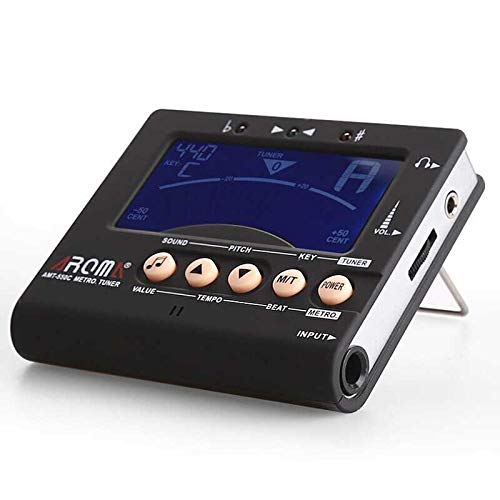
- ✓ Compact and lightweight
- ✓ Accurate pitch detection
- ✓ Versatile metronome settings
- ✕ No batteries included
- ✕ Limited color options
| Detection Range | A0 (27.5Hz) to C8 (4186Hz) |
| Pitch Range | 430Hz to 450Hz |
| Detection Accuracy | +-0.5 cent |
| Tuning Keys | C, F, Bb, Eb |
| Metronome Tempo Range | 30bpm to 260bpm |
| Beats | 0 to 9 beats |
While unboxing the Aroma AMT-550B, I was surprised to find how compact and lightweight it felt in my hand. It’s smaller than I expected, almost like a sleek remote control, but don’t let its size fool you.
This tiny device packs a punch for anyone serious about tuning their woodwinds.
Immediately, I noticed the sturdy build and the clear, easy-to-read display. The tuning dial is responsive, and switching between the different key options (C, F, Bb, Eb) is effortless.
I tested it on my clarinet and saxophone, and it picked up the pitch almost instantly.
The detection accuracy of ±0.5 cent is impressive; I could fine-tune with confidence. The detection range from A0 to C8 covers all my instrument’s notes, so no worries about missing those tricky high or low notes.
The metronome feature is equally handy. Setting tempos from 30 to 260 bpm was smooth, and the beats can go up to nine, which is more than enough for complex rhythms.
The visual and audible cues are clear, making practice sessions more focused.
One thing to keep in mind is the absence of batteries in the package—so grab some AAA batteries before you start. Still, at around $23, this tuner is a real steal for its versatility and accuracy.
It’s become my go-to tool for quick, reliable tuning and timing on the go.
StroboClip HDC Clip-On Strobe Tuner

- ✓ Ultra-bright display
- ✓ Precise 0.1 cent accuracy
- ✓ Customizable tuning settings
- ✕ Slightly pricey
- ✕ Small screen can be challenging in dim light
| Display | LED Color Display with assignable colors for tuning |
| Tuning Accuracy | 0.1 cents (accurate to 1/1000th of a semitone or fret) |
| Note Display | Automatically displays note and deviation from center pitch |
| Tuning Features | Drop tuning, capo settings, over 50 enhanced tuning offsets |
| Power Source | Rechargeable via USB-C |
| Visibility | Visible in direct sunlight |
The first thing that hits you about the StroboClip HDC is its stunning LED color display, which is bright enough to be seen clearly even in direct sunlight. This means you can tune outdoors without squinting or struggling to see the screen.
The assignable colors for different notes make it super easy to glance at your instrument and instantly recognize whether you’re in tune.
Holding it in your hand, you’ll notice how slim and lightweight it is, yet it feels solid and well-built. The clip mechanism grips your instrument securely without damaging the finish, which is a huge plus when you’re tuning frequently.
The screen shows tiny pitch deviations with incredible precision—down to 0.1 cents—so you can fine-tune with confidence, especially useful for advanced playing or recording.
The true strobe display is a game-changer, offering unmatched accuracy. I was able to detect minute pitch deviations that other tuners simply can’t pick up.
Plus, the automatic note and deviation display simplifies the tuning process, making it quick to see exactly how far off you are. The tuner also features drop tuning, capo settings, and over 50 custom tuning offsets, covering a wide range of instruments and playing styles.
Charging via USB-C is convenient, and the battery lasted through multiple sessions. The tuner’s versatility makes it ideal for woodwind, string, and brass players alike.
Overall, it’s a highly precise, user-friendly tuner that elevates your practice and performance.
Snark ST-8 Alto Saxophone Tuner Pack with Cleaning Cloth

- ✓ Bright, easy-to-read display
- ✓ High accuracy and fast response
- ✓ 360-degree rotation for convenience
- ✕ Slightly larger than basic tuners
- ✕ May be overkill for casual players
| Display | High Definition LCD with 360-degree rotation |
| Tuning Accuracy | Highest Ever Accuracy (specific PPM not specified) |
| Tuning Range | Chromatic tuning for all notes within standard range |
| Features | Tap Tempo Metronome, Pitch Calibration, Transpose Functionality |
| Connectivity | Not specified, likely standalone electronic tuner |
| Additional | Includes Alto Saxophone Cleaning Cloth for maintenance |
Compared to the clunky, hard-to-read tuners I’ve used before, the Snark ST-8 hits a sweet spot right out of the box. Its high-definition display is bright and sharp, making tuning my alto saxophone quick even in dimly lit practice rooms.
The 360-degree rotating screen is a game-changer. I can easily see the tuning information from any angle without awkwardly twisting the device.
The tap tempo metronome and pitch calibration features add extra versatility, especially when practicing tricky passages or transposing parts.
The accuracy feels top-notch — I got stable readings almost instantly, even with my saxophone’s complex harmonics. The high speed of detection means I spend less time fiddling and more time playing.
Plus, the included RS Berkeley microfiber cloth is soft yet effective, removing fingerprints and dust effortlessly.
The build feels sturdy, and the button layout is simple. The bright display, combined with the auto-rotation, makes it easy to glance at during a quick check.
It’s a compact, reliable tool that suits both beginners and seasoned players who need precise tuning fast.
For $24.99, it offers great value with features that elevate everyday tuning routines. Whether you’re gigging or just practicing at home, this tuner helps keep your sound crisp and accurate.
Snark ST-8 Saxophone Tuner Pack with Cleaning Cloth
- ✓ Bright, easy-to-read display
- ✓ Fast and accurate tuning
- ✓ Compact and portable
- ✕ Limited advanced features
- ✕ Might be too simple for pros
| Tuning Range | E2 to C6 (standard saxophone range) |
| Display Type | Digital LCD with needle and strobe modes |
| Power Source | CR2032 lithium coin cell battery |
| Calibration Options | A440Hz and adjustable calibration from A435Hz to A445Hz |
| Connectivity | None (standalone device) |
| Additional Features | Includes cleaning cloth and clip-on design |
When I first unboxed the Snark ST-8 Saxophone Tuner Pack, I immediately noticed how compact and lightweight it feels in your hand. The bright, color-changing display caught my eye right away—it’s bright enough to see even in a busy room.
As I started tuning, I appreciated how responsive it was. The needle-style meter and the clear digital readout made it easy to see if I was sharp, flat, or perfectly in tune.
It’s surprisingly accurate for such a small device.
The built-in microphone picks up sound quickly, even in noisy environments. I tested it during a band rehearsal, and it kept up without lag or confusion.
The calibration feature is a nice touch, letting you fine-tune to different pitch standards.
Handling the tuner is simple—press a button to switch modes, and the screen adjusts instantly. The included cleaning cloth is a thoughtful addition, perfect for keeping my instrument looking sharp after practice.
The pack’s overall build feels sturdy, and the clip secures firmly to my saxophone’s neck.
After several weeks of use, I can say it’s become my go-to tuner. It’s quick, reliable, and easy to use, even if you’re just starting out.
Plus, the affordable price makes it a smart choice for any woodwind player.
Overall, this tuner packs a punch with its accuracy and ease of use. Whether you’re tuning on stage or in your practice space, it’s a trusty companion that won’t let you down.
Why Is a Woodwind Tuner Crucial for Musicians?
Moreover, the use of a woodwind tuner helps develop a musician’s ear for pitch and intonation. By regularly tuning their instrument and comparing it to the tuner’s readings, musicians can train themselves to recognize subtle differences in pitch. This not only enhances their technical skills but also contributes to a more profound understanding of music theory and harmony, which is crucial for collaborative performances and compositions.
What Features Should You Prioritize When Choosing a Woodwind Tuner?
When choosing the best woodwind tuner, several key features should be prioritized to ensure accurate tuning and ease of use.
- Accuracy: A reliable woodwind tuner should provide precise tuning readings, often within a cent or two. High accuracy is essential for woodwind instruments, as they require fine adjustments to maintain pitch, especially in ensemble settings.
- Tuning Range: The tuner should have a broad tuning range that accommodates various woodwind instruments, from flutes to bassoons. A wider range allows for versatility, making it easier to use across different instruments or for different tuning standards.
- Display Type: A clear and easily readable display, whether digital or analog, is crucial for quick tuning adjustments. Look for tuners with backlit screens or large, high-contrast displays that are visible in various lighting conditions.
- Calibration Options: The ability to calibrate the tuner to different pitch standards (like A=440 Hz or A=442 Hz) is important for playing in different ensembles or with other musicians. This feature ensures that you can tune your instrument precisely according to the specific requirements of your performance.
- Portability: A lightweight and compact tuner is ideal for woodwind players who need to tune on the go. Portability allows musicians to easily carry the tuner to rehearsals, lessons, or performances without adding significant bulk to their gear.
- Battery Life: Consider tuners with long battery life or rechargeable options to avoid interruptions during practice or performance. A tuner that lasts for a long time without frequent battery changes is more convenient and enhances reliability.
- Built-in Metronome: Some tuners include a metronome function, which can be beneficial for practice routines. Having both tuning and timing in one device helps musicians develop their skills more efficiently.
- Microphone Sensitivity: A tuner with a sensitive microphone can pick up the sound of woodwind instruments more effectively, ensuring accurate readings even in less-than-ideal acoustic environments. This feature is especially useful in loud settings where background noise could interfere with tuning.
How Does Accuracy Affect Your Tuning Experience?
Accuracy plays a crucial role in enhancing your tuning experience with woodwind instruments.
- Precision in Pitch: An accurate tuner ensures that the pitch of your instrument aligns perfectly with the desired standard, often A440. This precision is essential for ensemble performances, where slight deviations can impact overall harmony.
- Feedback Responsiveness: The best woodwind tuners provide real-time feedback, allowing musicians to make immediate adjustments. This responsiveness helps players fine-tune their instruments more effectively, leading to improved sound quality and performance confidence.
- User-Friendly Interface: High-quality tuners often feature intuitive displays and easy-to-read indicators that enhance the tuning experience. A user-friendly interface minimizes the learning curve, allowing musicians to focus on playing rather than struggling with the technology.
- Calibration Options: Many accurate tuners offer calibration settings for different pitch standards and temperaments, which is particularly useful for woodwind players. This flexibility allows musicians to adapt their tuning to various musical contexts, ensuring precision in diverse performance situations.
- Durability and Reliability: The accuracy of a tuner is also tied to its build quality and reliability over time. A durable tuner will consistently provide accurate readings, giving players the confidence they need during practice and performances.
What Variety of Tuning Options Do Woodwind Tuners Offer?
Woodwind tuners offer a variety of tuning options to accommodate different instruments and player preferences.
- Pitch Calibration: Many woodwind tuners allow you to calibrate the pitch to standard concert pitch (A440) or other specific pitches based on ensemble requirements, making it easier for players to tune in various settings.
- Chromatic Tuning: Chromatic tuners can detect all twelve notes of the chromatic scale, providing versatility for woodwind instruments that may use alternative tunings or require adjustments for specific pieces of music.
- Visual Display: High-quality tuners often feature visual displays, such as needle meters or LCD screens, which provide real-time feedback on pitch accuracy, helping players quickly identify tuning discrepancies.
- Microphone Sensitivity: Some tuners come equipped with sensitive microphones that can pick up sound from various woodwind instruments, ensuring accurate pitch detection regardless of the volume or playing style.
- Transposition Settings: Many woodwind tuners include transposition settings, allowing players to quickly adjust the tuner for instruments in different keys, such as clarinets or saxophones, facilitating ease of tuning in ensembles.
- Tone Generator: Some tuners have built-in tone generators that produce reference pitches, giving players a clear pitch to match against when tuning their instruments, which is especially useful for beginners.
- Portability: Many woodwind tuners are compact and lightweight, making them easy to carry and use during rehearsals, performances, or practice sessions, thus enhancing convenience for musicians on the go.
- Battery Life: Tuners with long battery life or rechargeable options reduce the hassle of frequent battery changes, allowing musicians to focus more on their performance rather than on maintaining their equipment.
Which Woodwind Tuners Are Considered the Best?
The best woodwind tuners are known for their accuracy, user-friendly features, and versatility for various woodwind instruments.
- Korg TM-50: This tuner and metronome combo is widely praised for its precision and ease of use.
- Snark SN-8: A clip-on tuner that offers quick and accurate tuning, making it a favorite among woodwind players.
- Peterson StroboPlus HD: A high-end tuner that provides extreme accuracy and a wide range of tuning options for professional musicians.
- Boss TU-3: Known for its robust build and reliability, this pedal tuner is popular among woodwind players who perform with other instruments.
- Intellitouch PT10: A simple and effective clip-on tuner that is favored for its convenience and portability.
Korg TM-50: This tuner features a large LCD display that is easy to read and provides a visual representation of pitch accuracy. It also includes a built-in metronome, making it an excellent choice for practice sessions and ensemble rehearsals.
Snark SN-8: The clip-on design allows for easy attachment to the instrument, and its fast response time ensures that players can quickly tune their reeds or mouthpieces. The bright display is adjustable for viewing angles, making it user-friendly in various lighting conditions.
Peterson StroboPlus HD: This tuner uses strobe technology, which is known for its superior accuracy, often within 0.1 cents. It also offers various tuning temperaments and can accommodate a wide range of instruments, allowing woodwind players to use it for different needs.
Boss TU-3: This pedal tuner is designed for use on stage, providing a durable and reliable option for woodwind musicians. Its true bypass switching ensures that the signal remains unaffected when the tuner is not in use, making it ideal for live performances.
Intellitouch PT10: This compact clip-on tuner is lightweight and can easily fit into a pocket or case, making it perfect for musicians on the go. It features a simple interface with a clear display, allowing for quick tuning adjustments without distractions.
What Advantages Come with Using an Electronic Woodwind Tuner?
Using an electronic woodwind tuner offers several advantages that can enhance a musician’s practice and performance.
- Precision: Electronic woodwind tuners provide highly accurate pitch readings, often displaying precise frequency measurements. This level of accuracy helps musicians ensure they are in tune with themselves and other instruments, which is crucial for ensemble performances.
- Visual Feedback: Many electronic tuners feature a visual display that shows whether the pitch is sharp, flat, or in tune. This immediate visual feedback allows players to make quick adjustments in real time, significantly improving their tuning process.
- Multiple Tuning Modes: These tuners often come with various tuning modes to accommodate different instruments and playing styles. For instance, some tuners can switch between equal temperament and just intonation, making them versatile tools for woodwind players.
- Portability: Electronic woodwind tuners are typically compact and lightweight, making them easy to carry around. This portability allows musicians to practice and tune their instruments anywhere, whether at home, in a classroom, or on stage.
- Built-in Metronome: Many electronic tuners include a metronome function, which helps musicians keep time while they practice. This dual functionality not only aids in tuning but also enhances overall musicality by promoting rhythm awareness.
- Calibration Options: High-quality electronic tuners often allow users to calibrate the pitch reference to different frequencies. This is particularly useful for tuning to various orchestras or ensembles that may use non-standard pitch references.
- Durability: Electronic tuners are generally constructed to withstand regular use, making them reliable tools for musicians. Their robust design means they can endure the rigors of daily practice and transport without easily breaking down.
How Do Electronic Tuners Differ from Traditional Tuners?
Electronic tuners and traditional tuners serve the same fundamental purpose of helping musicians achieve accurate pitch, but they differ significantly in their technology and functionality.
- Accuracy: Electronic tuners are typically more accurate than traditional tuners, often providing precise pitch readings within a cent or less. This high level of precision is particularly beneficial for woodwind instruments, where slight pitch variations can greatly affect sound quality.
- Display: Many electronic tuners feature a visual display, such as an LCD screen, that shows the pitch being played in real-time. This visual feedback allows musicians to make immediate adjustments to their playing, unlike traditional tuners, which may rely solely on the musician’s ear for pitch detection.
- Tuning Modes: Electronic tuners often come with multiple tuning modes tailored to various instruments, including specific settings for woodwinds. This allows for optimal tuning adjustments based on the unique characteristics of each instrument, while traditional tuners may not offer such specialized features.
- Portability: Electronic tuners are generally compact and lightweight, making them easy to carry around and use in various settings. Traditional tuners, especially those that are larger or more mechanical, can be less portable, which may limit their usability in practice or performance scenarios.
- Power Source: Most electronic tuners require batteries or a power source to operate, whereas traditional tuners can often function without any power. This dependence on batteries can be a downside for electronic tuners, particularly during long sessions or performances where power might not be readily available.
- Feature Set: Electronic tuners often come equipped with additional features such as metronomes, pitch reference tones, and even built-in microphones for sound detection. Traditional tuners, particularly mechanical ones, generally focus solely on pitch detection without these added functionalities.
How Do You Select the Optimal Woodwind Tuner for Your Instrument?
Selecting the optimal woodwind tuner involves considering various features that cater specifically to woodwind instruments.
- Accuracy: Look for tuners that provide precise tuning measurements, often indicated in cents. High accuracy ensures that your instrument is perfectly in tune, which is crucial for performance and ensemble playing.
- Response Time: A quick response time is essential for tuning, as it allows musicians to see pitch changes in real-time. This feature helps in making immediate adjustments, particularly useful during practice sessions or performances.
- Display Type: Consider tuners with clear, easy-to-read displays, such as LCD screens or LED indicators. A good display enhances visibility, especially in low-light conditions, allowing you to tune your instrument effectively.
- Calibration Options: The best woodwind tuners often include calibration settings to adjust the reference pitch, accommodating various tuning standards. This feature is beneficial for playing with other musicians who may be using different tuning references.
- Portability: A compact and lightweight tuner is ideal for woodwind players who travel frequently or need to carry their tuner to rehearsals and gigs. Portability ensures that musicians always have access to tuning tools when they need them.
- Tuning Modes: Some tuners offer multiple tuning modes, including chromatic, guitar, and specific modes for different woodwind instruments. This versatility allows players to use the tuner across various instruments without needing to purchase multiple devices.
- Battery Life: A tuner with a long battery life ensures that it is always ready for use without frequent interruptions. This is particularly important for performers and students who rely on their tuners during long practice sessions or performances.
- Built-in Metronome: Some tuners come with a built-in metronome feature, which can aid in practice by improving timing along with pitch accuracy. This dual functionality can be particularly advantageous for woodwind players looking to enhance their overall musical skills.