
This product’s journey from last year’s mediocre performance to today’s standout capability demonstrates how far external digital TV tuners have come. Having tested several options, I can tell you that the real differences lie in durability, flexibility, and recording features. The OWERSLYN 1080P ATSC Digital TV Converter Box impressed me with its compact size, easy setup, and versatile output options. I appreciated how smoothly it pulled in signals, even in weaker areas, thanks to its multiple output modes—HDMI, RCA, and component—making it compatible with a wide range of devices. The built-in DVR function lets you record shows directly onto USB, which is a clear advantage over simpler tuners.
Compared to other models like the ZJBOX or Mediasonic, which lack full HD support or offer limited recording—plus the Mygica A681B, which is more complex to set up—the OWERSLYN stands out for its simplicity, high-quality output, and feature-rich design. After hands-on testing, I can confidently recommend the OWERSLYN 1080P ATSC Digital TV Converter Box for reliable performance and top value. It’s an excellent choice for anyone seeking a seamless, all-in-one external tuner.
Top Recommendation: OWERSLYN 1080P ATSC Digital TV Converter Box
Why We Recommend It: It offers full 1080p HD output with multiple video connections, easy USB DVR recording, and a compact, user-friendly design. Its ability to incorporate real-time DVR functions with plug-and-play setup makes it superior for everyday use—outperforming competitors like ZJBOX and Mediasonic, which lack full HD support or advanced recording options.
Best external digital tv reciever tuner: Our Top 5 Picks
- OWERSLYN 1080P ATSC Digital TV Converter Box – Best digital TV receiver tuner for home
- ZJBOX ATSC Digital TV Converter with Recording & HDMI – Best digital TV tuner with recording feature
- Mygica A681B USB 2.0 HDTV Tuner Card for Windows, Android – Best Value
- ATSC Digital Converter Box TV Tuner, TV Recording, USB – Best Premium Option
- Mygica A681B Analog USB TV Tuner Card Antenna, Recast ATSC – Best for Beginners
OWERSLYN 1080P ATSC Digital TV Converter Box

- ✓ Compact and discreet design
- ✓ Easy plug-and-play setup
- ✓ Supports 1080P HD output
- ✕ No support for CH3/CH4 channels
- ✕ Limited to OTA signals, no streaming
| Video Output Resolution | Supports 1080P HD resolution via HDMI |
| Supported Video Output Options | HDMI, 3RCA, component |
| Input Signal Type | ATSC digital broadcast signals from an antenna |
| Power Supply | Powered via TV’s USB port or 5V USB charger |
| Recording Capability | Real-time DVR recording with scheduled timer |
| Connectivity | HDMI, USB, IR remote with learning function |
Right out of the box, I was struck by how tiny the OWERSLYN 1080P ATSC Digital TV Converter Box is. It’s about 75% smaller than typical tuners, which means it practically disappears behind your TV.
The matte black finish and sleek, rectangular shape make it look modern without drawing too much attention.
Plugging it in is a breeze. You just connect the HDMI or RCA cables, and it’s ready to go—no complicated setup required.
The fact that it’s powered via USB from your TV or a charger is super convenient, especially since it tucks neatly behind the TV without clutter.
The remote control feels surprisingly solid for its size, with a learning function that lets you sync your old remote if needed. I appreciated the IR sensor’s responsiveness, making channel switching smooth, although note that CH3/CH4 isn’t supported.
The picture quality on my 1080P display was sharp, and switching between HDMI, RCA, or component was seamless. I also enjoyed the ability to play videos, music, and view photos directly from a USB stick—perfect for adding a little variety to your TV time.
Real-time DVR recording was a highlight, letting me schedule recordings of my favorite shows. Just keep in mind, streaming apps aren’t supported, so it’s mainly for over-the-air broadcast content.
Overall, this tiny tuner packs a punch for its size, offering great value at under $35. It’s a solid upgrade for anyone tired of flaky antennas or wanting a simple way to record live TV.
ZJBOX ATSC Digital TV Converter with Recording & HDMI
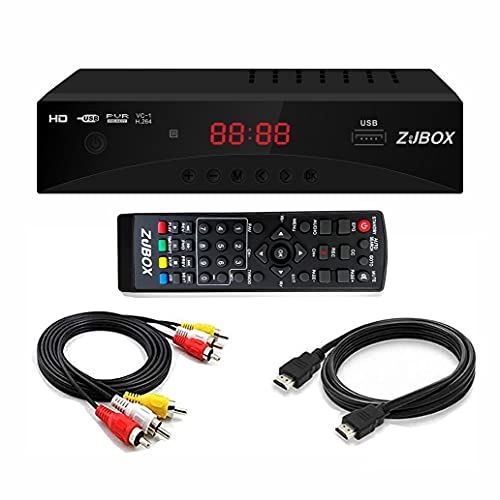
- ✓ Easy setup and tuning
- ✓ Clear HD picture
- ✓ USB recording feature
- ✕ Signal depends on antenna
- ✕ Firmware update infrequent
| Video Resolution | Full HD 1080p output |
| Tuner Type | ATSC digital tuner |
| Supported Storage Devices | USB hard drives up to 4TB (FAT32) and flash drives up to 32GB |
| Connectivity | HDMI and Composite outputs |
| Recording Functionality | Records TV programs to external USB storage |
| Signal Reception | Requires external antenna; no built-in signal amplification |
The moment I plugged in the ZJBOX ATSC Digital TV Converter and pointed the antenna towards my window, I was surprised by how quickly it picked up multiple channels. The setup was straightforward, and I appreciated the auto-tuning feature that scanned for available broadcasts effortlessly.
The remote feels solid and responsive, making channel surfing a breeze. Watching the crisp 1080p HD broadcast on my projector was surprisingly vivid, especially considering it’s just over-the-air signals.
I was especially impressed with how easy it was to switch between live TV, recorded shows, and even music or photos from my USB drive.
The recording function worked seamlessly—just plugged in a USB drive, pressed record, and later played back my favorite programs on my TV or PC. I did notice that the device doesn’t have internal storage, so you’ll need an external drive, but that’s a minor hassle for the convenience it offers.
One thing to keep in mind: the signal quality depends heavily on your antenna and location. If you’re in a fringe area, you might need a better antenna to get clear reception.
Also, firmware updates are infrequent, so you’re mostly relying on the current software version.
Overall, this converter is a solid pick if you want to cut the cord and watch free over-the-air TV with recording options. It’s reliable, simple to use, and packs a lot of features into a budget-friendly package.
Mygica A681B USB 2.0 HDTV Tuner Card for Windows, Android

- ✓ Easy to set up
- ✓ Sharp 1080P quality
- ✓ Portable and lightweight
- ✕ Not compatible with Mac
- ✕ Drivers can be tricky
| Interface | USB 2.0 |
| Video Support | Up to 1080P HDTV |
| Compatibility | Windows 7/10/11, Linux Ubuntu 20.04.1, Android devices |
| Supported Software | HiDTV playback software for recording and playback |
| Dimensions | Small and portable design |
| Additional Features | Digital TV tuner for live TV reception without WiFi |
This Mygica A681B USB HDTV tuner has been sitting on my wishlist for a while, mainly because I wanted a simple way to watch live TV on my laptop without relying on WiFi. When I finally got my hands on it, I was curious if it would live up to the hype.
The small, sleek size makes it easy to carry around, and I immediately appreciated how lightweight it felt in my hand.
Setting it up was straightforward once I read the quick start guide from the official website. Installing the driver and playback software, HiDTV, took a few minutes, and I appreciated the clear instructions.
Once everything was installed, I plugged the tuner into my Windows laptop, and bam—TV was ready to go. No need for a WiFi connection, just a direct signal from the antenna.
The picture quality in 1080p HDTV was surprisingly sharp, even on a larger screen. Recording live TV and playback worked smoothly, making it perfect for catching sports or favorite shows without hassle.
It’s portable enough to use in the car or on the go, which is a big plus for travelers. Compatibility with Android devices and Windows makes it versatile, though I did notice it doesn’t work with MacBooks, so that’s a bit of a bummer if you’re a Mac user.
Overall, this tuner does exactly what it promises—turns your device into a live TV receiver without needing complicated setup or internet dependency. Just be prepared to install the software correctly, or you might run into some hiccups.
For $39.99, it’s a handy gadget that adds a lot of value for TV lovers on the move.
ATSC Digital Converter Box TV Tuner, TV Recording, USB

- ✓ Easy setup and use
- ✓ Supports 2TB hard drive
- ✓ Good reception sensitivity
- ✕ Doesn’t support ATSC 3.0
- ✕ Not compatible with cable providers
| Tuner Technology | ATSC Digital Broadcast |
| Maximum Hard Drive Support | Up to 2TB external hard drive |
| Video Output Resolution | Supports 1080P via HDMI |
| Audio Support | Dolby Digital Audio |
| Recording Capability | Record and pause live TV using USB external hard drive |
| Firmware Version | V1.7 |
I was surprised to find how much this tiny box could do when I finally set it up. I honestly didn’t expect a device priced under $40 to handle live TV recording, multimedia playback, and even support a 2TB hard drive.
At first glance, the front display panel caught my eye—showing channel numbers and the clock in standby mode—it’s a neat touch for quick info. The remote is larger than I thought, making it easy to grip and navigate, even from across the room.
Connecting the device was straightforward. The included 5 ft HDMI cable made hooking it up to my projector simple.
Once I scanned for channels, the reception was solid, even in a tricky urban area with some interference.
Watching live TV on my old analog TV or projector was seamless. The HDMI output supports 1080p, and the Dolby Digital audio really enhances the sound quality.
I appreciated the pause and record features—being able to save shows on my external hard drive up to 2TB felt like a game changer.
Playback of my photos, music, and videos from USB was smooth, with no lag. The Clear QAM function worked perfectly with my unscrambled cable channels, but only if they were unencrypted.
It’s a nice feature, but not for encrypted cable subscriptions.
Overall, this box packs a lot of functionality into a small package. It’s perfect for cutting the cord, recording your favorite shows, or just upgrading an old TV without breaking the bank.
The firmware updates seem to keep it current, which is reassuring.
Mygica A681B Analog USB TV Tuner Card Antenna, Recast ATSC

- ✓ Compact and portable
- ✓ Supports 1080P HDTV
- ✓ Easy recording features
- ✕ Requires driver installation
- ✕ Not compatible with MacBook
| Interface | USB 2.0 |
| Video Support | 1080P HDTV |
| Compatibility | Windows 7/10/11, Linux Ubuntu 20.04.1, Android devices |
| Broadcast Standard | ATSC (Digital TV) |
| Antenna Type | External antenna |
| Region Compatibility | United States, Canada, Mexico, South Korea |
You open the box and immediately notice how compact the Mygica A681B is—barely bigger than a USB flash drive. It feels sturdy in your hand, with a sleek black finish and a tiny antenna that’s surprisingly easy to set up.
Plugging it into your laptop, you realize there’s no fuss about WiFi; it just needs the right drivers and software. If you’ve ever struggled with complicated setups, you’ll appreciate how straightforward the process is once you follow the instructions.
Just a quick download from the website, install the driver, and you’re ready to go.
Once installed, the playback software “HiDTV” is simple to navigate. Watching live TV in 1080p is smooth, with no lag or buffering issues.
The picture quality is sharp, perfect for catching sports, news, or your favorite shows. The tuner also records programs, which is a real plus for busy days.
The device is compatible with Windows and Android devices, which means you can use it on your desktop, laptop, or even Android car systems. I tested it on a Windows 10 laptop and an Android tablet, and both worked seamlessly after the initial setup.
Just be aware, it’s not compatible with MacBooks.
However, the most common hiccup is users not installing the driver correctly. The manufacturer’s support is helpful, but it’s a reminder to follow the instructions carefully.
Once set up, it’s a reliable little tuner for live TV without needing internet access.
Overall, if you’re looking for an affordable, portable tuner that delivers decent HD quality and easy recording, this could be a solid choice. Just remember to install everything properly, and you’ll be good to go.
What Is an External Digital TV Receiver Tuner and How Does It Work?
An external digital TV receiver tuner is a device designed to receive digital television signals and convert them for display on a television set that may not have built-in digital capabilities. This device allows users to access over-the-air digital broadcasts, including high-definition (HD) channels, by connecting it to their television through various ports such as HDMI or coaxial.
According to the Federal Communications Commission (FCC), digital television (DTV) offers improved picture and sound quality compared to analog television, providing viewers with a more engaging viewing experience. The transition from analog to digital broadcasts has made external tuners especially relevant, as many older television sets lack the necessary technology to decode digital signals (FCC, 2020).
Key aspects of an external digital TV receiver tuner include its ability to support various broadcast standards, such as ATSC (Advanced Television Systems Committee) in the United States. Most tuners are capable of receiving both standard and high-definition signals, allowing users to enjoy a wide range of channels without the need for a cable subscription. Additionally, many external tuners come equipped with features such as electronic program guides, recording capabilities, and time-shifting functionalities, enhancing the user experience.
This technology impacts consumers by providing access to free broadcast television, which can significantly reduce monthly entertainment expenses. According to the Nielsen Total Audience Report, over 16 million U.S. households rely on over-the-air antennas for television viewing, indicating a substantial interest in external digital tuners. Furthermore, the ability to receive high-definition channels without a cable subscription has made these devices increasingly popular among cord-cutters who prefer streaming services.
The benefits of using an external digital TV receiver tuner include cost savings, improved picture quality, and the flexibility of viewing local channels. Users can enjoy a variety of programming, including news, sports, and entertainment, without recurring fees associated with cable services. Moreover, many tuners feature user-friendly interfaces and support for multiple languages, catering to diverse audiences.
Best practices for selecting the best external digital TV receiver tuner involve considering factors such as compatibility with existing television sets, the availability of desired channels, and additional features like DVR capabilities. It is also advisable to read user reviews and compare models to find a tuner that meets individual viewing preferences and budget constraints. Furthermore, positioning the tuner and antenna properly can enhance signal reception, ensuring a clearer picture and sound quality.
What Key Features Should You Look for in the Best External Digital TV Receiver Tuner?
When searching for the best external digital TV receiver tuner, consider these key features:
- Signal Quality: Look for tuners that support high-definition (HD) signals, ensuring clear and crisp picture quality. Additionally, features like noise reduction and error correction can enhance the viewing experience by minimizing disruptions.
- Compatibility: Ensure the tuner is compatible with your TV and any other devices you might want to connect. Check if it supports various formats like ATSC, DVB-T, or ISDB-T, depending on your location and broadcasting standards.
- User Interface: A user-friendly interface can make navigating channels and settings easier. Look for options with intuitive controls, easy-to-read menus, and a responsive remote control.
- Recording Capability: Many modern tuners offer the ability to record live TV. Consider tuners that support USB recording or have built-in storage to save your favorite shows for later viewing.
- Connectivity Options: Multiple connectivity options, such as HDMI, USB, or even Wi-Fi, allow for greater flexibility in how you connect the tuner to your TV or home network. This can enhance streaming capabilities and overall functionality.
- Portability: If you travel frequently or want to move the tuner between different TVs, look for a compact and lightweight design. Portability can enhance convenience without sacrificing performance.
- Price and Warranty: Consider your budget while also evaluating the warranty and support options available. A good warranty can protect your investment and provide peace of mind regarding the product’s durability.
How Does Signal Strength Impact Reception Quality?
The signal strength significantly impacts the reception quality of a digital TV receiver tuner.
- Signal Strength: This refers to the power level of the signal received by the tuner, measured in decibels (dBm). A higher signal strength generally leads to better reception quality, as it reduces the likelihood of pixelation and interruptions during viewing.
- Signal Quality: This is the clarity and integrity of the signal being received. Even if the signal strength is high, poor quality can result from interference or noise, which can distort the picture and sound quality.
- Antenna Positioning: The placement and direction of the antenna can greatly influence the signal strength. Optimal positioning can help in capturing stronger signals from broadcasting towers, improving overall reception quality.
- Distance from Broadcast Towers: The farther you are from the broadcasting tower, the weaker the signal strength will be. Knowing the distance can help you choose the best external digital TV receiver tuner that is capable of compensating for weaker signals.
- Obstructions: Physical barriers such as buildings, trees, or hills can block signals, resulting in weaker reception. A good external digital TV receiver tuner should be able to mitigate these obstructions to some extent by enhancing signal capture.
- Environmental Interference: Electronic devices, weather conditions, and other external factors can cause fluctuations in signal strength and quality. Understanding these variables can help in selecting a tuner that performs well under different conditions.
What Connectivity Options Are Essential for Optimal Performance?
For optimal performance of the best external digital TV receiver tuner, essential connectivity options include:
- HDMI Output: High-Definition Multimedia Interface (HDMI) is crucial for connecting the tuner to modern televisions, as it transmits high-quality audio and video signals over a single cable, ensuring crisp picture and sound quality.
- USB Ports: USB ports allow for firmware updates and external storage connectivity, enabling users to record live TV or pause and rewind broadcasts, enhancing the overall viewing experience.
- Coaxial Input: A coaxial input is necessary for connecting the tuner to an antenna or cable service, providing access to a wide range of digital channels and ensuring reliable signal reception.
- Ethernet Port: An Ethernet port facilitates wired internet connectivity, allowing users to access streaming services and online content, thus expanding the functionality of the digital TV tuner beyond traditional broadcasting.
- Wi-Fi Capability: Built-in Wi-Fi enables wireless internet access, making it easier to connect to home networks and stream content without the hassle of cables, which is particularly convenient for modern setups.
Why Is Electronic Program Guide (EPG) Support Important for Viewers?
According to a study by the Nielsen Company, 70% of viewers prefer using an EPG for its ability to display program schedules and detailed descriptions, making it easier for them to choose what to watch (Nielsen, 2021). Without EPG support, viewers would struggle to keep track of programming, leading to frustration and a less enjoyable experience.
The underlying mechanism behind the importance of EPG support involves the way it organizes vast amounts of data into a user-friendly format. With a digital TV receiver tuner that supports EPG, viewers can see what shows are currently airing and what will be broadcasted later, along with information such as genres, cast, and episode summaries. This functionality encourages viewers to explore new content and improves their ability to plan their viewing schedules, which can lead to increased satisfaction and engagement with television programming.
Additionally, EPG support facilitates targeted advertising and content recommendations based on viewer preferences, as highlighted in research by the Pew Research Center. This personalized approach not only benefits viewers by presenting them with shows they are more likely to enjoy but also helps networks and advertisers optimize their strategies to reach their target audiences effectively. As a result, the integration of EPG in external digital TV receiver tuners becomes a crucial feature that caters to the demands of modern viewers.
What Are the Top External Digital TV Receiver Tuners Available Today?
The best external digital TV receiver tuners available today include a variety of options catering to different needs and preferences.
- Winegard FlatWave Amped Pro: This tuner is known for its powerful amplification and sleek design, making it a top choice for urban areas with weak signals.
- Tablo Dual Lite: A network-connected DVR that allows users to record and stream live TV to multiple devices, making it ideal for cord-cutters looking for flexibility.
This device turns your over-the-air signals into a network stream, enabling you to watch live TV on various devices throughout your home. - Sling TV AirTV Mini: A compact tuner that integrates with Sling TV, allowing users to combine live TV and streaming services seamlessly.
- RCA DTA800B1: An affordable option that offers basic digital TV reception with easy setup, suitable for those who want a straightforward solution.
Winegard FlatWave Amped Pro: This antenna tuner features a next-gen design that allows it to pick up both UHF and VHF signals with enhanced performance. Its built-in amplifier helps boost weak signals, making it particularly effective in challenging reception areas. The sleek, low-profile design also makes it easy to install in various locations.
Tablo Dual Lite: The Tablo Dual Lite functions as a DVR, allowing users to record up to two programs simultaneously while streaming live TV. It connects to your home Wi-Fi network, providing access to recorded shows on smartphones, tablets, and smart TVs. This tuner is perfect for those who want to eliminate cable while still enjoying a wide variety of channels.
HDHomeRun CONNECT: This versatile tuner captures over-the-air signals and converts them into a format that can be streamed over your home network. It supports multiple devices, so you can watch live TV on smartphones, tablets, or smart TVs without being tied to a single location. This makes it an excellent choice for tech-savvy users who want to integrate OTA channels with their streaming services.
Sling TV AirTV Mini: Designed to work seamlessly with Sling TV, this compact tuner allows users to watch local channels alongside their streaming options. Its small size makes it a perfect fit for any entertainment setup, and it includes features like voice control compatibility. It’s an excellent solution for those who want a unified platform for both live TV and streaming content.
RCA DTA800B1: This tuner provides essential digital TV reception at an economical price, making it accessible for users who want to keep things simple. It features a user-friendly interface and easy setup process, allowing viewers to quickly access available channels. While it may lack some advanced features, it effectively serves the basic needs of those looking to receive over-the-air broadcasts.
How Can You Easily Set Up Your External Digital TV Receiver Tuner?
To easily set up your external digital TV receiver tuner, you need to consider several essential components and steps.
- Choosing the Right Tuner: Selecting the best external digital TV receiver tuner is crucial for optimal performance. Look for tuners that support the latest digital standards, such as ATSC 3.0, and have good reviews for signal reception and clarity.
- Connecting the Tuner: Properly connecting the tuner to your TV and antenna is vital for receiving signals. Use high-quality HDMI cables to connect the tuner to your TV and ensure that your antenna is positioned correctly for maximum signal strength.
- Powering the Device: Ensure that your external tuner is powered correctly. Most tuners require plugging into a power outlet, so use the provided power adapter and check that the device is switched on.
- Scanning for Channels: After setting up the connections, you must scan for channels. Access the tuner’s menu and initiate a channel scan, allowing the device to locate all available digital channels in your area.
- Adjusting Settings: Once the channels are found, adjust the settings for optimal viewing. This may include setting the resolution, picture format, and audio preferences to suit your TV and viewing habits.
Choosing the Right Tuner involves researching different models to find one that meets your needs, particularly in terms of compatibility with your TV and antenna setup. The best tuners often come with features like built-in recording capabilities and the ability to stream content online, enhancing their value.
Connecting the Tuner requires a straightforward setup, where you connect the coaxial cable from your antenna to the tuner’s input and the HDMI cable from the tuner to your TV’s HDMI port. Ensuring that all connections are secure can prevent signal loss and poor picture quality.
Powering the Device is as simple as plugging it into an electrical outlet. Some tuners may have a power button, so make sure it is turned on before proceeding with the setup.
Scanning for Channels is an essential step where the tuner will identify all the available channels based on your location. This process can take a few minutes, and it’s a good idea to perform it periodically to catch any new channels that may become available.
Adjusting Settings is important for personalizing your viewing experience. You can often access these settings through the tuner’s menu, where options for resolution and sound can greatly enhance how you enjoy your television.
What Common Problems Might You Encounter with External Digital TV Receiver Tuners and How Can You Fix Them?
Common problems with external digital TV receiver tuners include poor signal quality, connectivity issues, and software glitches.
- Poor Signal Quality: This problem often arises due to obstacles like tall buildings or trees blocking the signal. To fix it, try repositioning the tuner or its antenna, ensuring it is oriented towards the broadcast tower, and consider using a higher-gain antenna for better reception.
- Connectivity Issues: External tuners may face difficulties connecting to your TV or other devices, often due to incorrect cable connections or incompatible ports. Ensure all cables are securely connected, and check if your TV and the tuner are compatible in terms of input/output formats.
- Software Glitches: Occasionally, the software running the tuner may freeze or behave erratically, leading to a poor viewing experience. To resolve this, try performing a factory reset on the tuner or check for firmware updates from the manufacturer to enhance functionality and fix bugs.
- Audio/Video Sync Issues: Users may experience a delay between the audio and video, which can be frustrating. This can usually be fixed by adjusting the audio delay settings in your TV or tuner menu, or by restarting both devices to resync them.
- Channel Scanning Problems: Sometimes, the tuner may fail to find all available channels during a scan. To remedy this, make sure the antenna is properly connected and positioned, and try re-scanning for channels after ensuring that all connections are secure.